Author: eric.glas@icloud.com

  • State Farm vs. Allstate Car Insurance: Premiums, Budget Policies, and Smart Savings in 2025

    State Farm vs. Allstate Car Insurance: Premiums, Budget Policies, and Smart Savings in 2025

    Car insurance costs climbed in 2025, and many drivers feel it. The average full coverage premium is about $2,637 per year nationwide, while the national average for minimum coverage is around $682 per year. State Farm’s effective rate change is about 13.9% this year, and Allstate’s is about 11.1%. In most profiles, State Farm tends to be cheaper, especially for young drivers. Allstate often costs a bit more, but it offers more policy add-ons and customization. Prices still vary by state, age, driving record, and vehicle. For SEO clarity, you might also see All State used in search, though Allstate is the brand’s standard spelling.

    Here is what you will learn today: who is usually cheaper, how budget policies work, which discounts matter most, and a simple decision guide to pick the right fit for your wallet.

    2025 Price Snapshot: Who Is Cheaper, State Farm or Allstate?

    State Farm is often lower for many drivers in 2025, especially teens and young adults. Allstate tends to be slightly higher on the base price, but it offers more optional features and add-ons.

    Use the nationwide averages as a guide, not a rule. Full coverage sits around $2,637 per year, and minimum coverage averages $682 per year. Your local quote can differ a lot. Think of the national number as a yardstick to set expectations before you compare side by side.

    Independent reviews echo this pattern. Many analyses find State Farm is typically more affordable on the base rate, while Allstate stands out for customization and extra options. See broad comparisons from trusted sources like U.S. News and Forbes Advisor.

    Average Costs in 2025: Full Coverage vs Minimum Coverage

    • Full coverage average: about $2,637 per year
    • Minimum coverage average: about $682 per year

    Both State Farm and Allstate sell minimum coverage for tight budgets and full coverage for broader protection. Full coverage usually includes liability, collision, and comprehensive.

    For many drivers, State Farm often lands below the national average. Allstate often sits near it, sometimes a bit above. Still, your actual quote depends on your state, city, vehicle, and record.

    Young Drivers and High-Risk Profiles: Where State Farm Often Wins on Price

    Young drivers pay more because risk is higher. This is where State Farm often pulls ahead. For example, an 18-year-old with State Farm pays about $296 per month on average, which shows how State Farm can be more forgiving on price for newer drivers.

    Why the gap? State Farm often offers stronger safe driver and student savings, which can compound. A clean record, good grades, and a defensive driving course can stack together. High-risk profiles, like a recent at-fault accident, can also see better recovery pricing with State Farm compared to some competitors.

    Third-party comparisons back up this trend, pointing to State Farm’s advantage for teens and young drivers. See data-backed summaries at The Zebra’s State Farm vs. Allstate comparison and Insurify’s 2025 guide.

    Rate Changes in 2025: What Recent Increases Mean for Your Wallet

    Rates climbed in 2025. State Farm’s effective change is about 13.9%, and Allstate’s is about 11.1%. These hikes can affect renewals and new quotes. Your renewal may jump, even if your profile stayed the same.

    When this happens, shop both companies again. After a rate change, one brand may become more competitive in your area. Get fresh quotes, match coverage line by line, and check the discount list each time you renew.

    Budget Policies and Discounts: How to Pay Less With Each Company

    You can cut costs without gutting protection. Both companies offer ways to trim the bill:

    • Pick minimum coverage if you only need the basics and your car holds lower value.
    • Choose higher deductibles for collision and comprehensive to lower your premium.
    • Use common discounts like bundling, paperless, autopay, and good driver.
    • Consider usage-based savings if you drive safely and want feedback on your habits.

    Allstate generally offers more add-ons and optional features. State Farm usually keeps a sharper base rate. Both can work for a budget buyer if you choose well.

    Websites for sale neon sign with starting prices over digital background.
    Neon sign advertising websites for sale starting at $149, ideal for entrepreneurs and investors.

    State Farm Savings: Safe Driver, Multi-Car, Student, and Course Discounts

    Common State Farm savings include:

    • Good driver: Rewards a clean record.
    • Multiple cars: Lower rate per car when you insure more than one.
    • Safety features: Savings for airbags, anti-theft, and similar features.
    • Student: Good student and student-away discounts help families.
    • Defensive driving course: A short class can reduce your premium.

    Usage-based tracking is often available too. Careful drivers may save more over time. These can stack with home or renters bundling for bigger household savings.

    Who benefits most? Families adding a teen, commuters with a clean record, and drivers with cars that have modern safety tech. These profiles can combine several discounts while keeping coverage limits at a safe level.

    Allstate Savings and Add-Ons: Accident Forgiveness, Rideshare, and Custom Options

    Allstate is known for a broad menu of discounts and extras. Popular options include accident forgiveness and rideshare coverage for app-based drivers. Add-ons can help you tailor protection to your life.

    Keep one key idea in mind. Every add-on can raise the premium. Treat add-ons like toppings on a pizza, a few that fit your needs are great, too many can get pricey. Match features to real risks. If you drive for rideshare part-time, rideshare coverage can plug gaps. If you want cushion after your first at-fault crash, accident forgiveness can make sense.

    For a balanced look at cost versus features, see side-by-side insights from MarketWatch Guides.

    Comparison of two football teams facing off in a stadium with a goat mascot referee in the center for insurance quotes comparison.
    Football teams face off in stadium with goat mascot referee; compare car insurance quotes easily.

    Bundling, Paperless, and Payment Choices That Lower Your Bill

    Shared savings tools both State Farm and Allstate offer:

    • Bundle auto and home or renters: The total household bill often drops.
    • Paperless and autopay: Small monthly savings that add up.
    • Pay in full: Many policies reward one annual payment.
    • Claim-free renewals: Keep your record clean to protect your rate.

    Quick tip: keep deductibles and coverage limits the same when comparing quotes. Bundling can deliver bigger total value, even if one auto quote looks slightly higher on its own.

    Match Discounts to Your Lifestyle

    • Daily commuters: Look for safe driver and usage-based savings. State Farm often prices well if you keep a clean record. Allstate can work if you prefer more custom features.
    • Occasional drivers: Usage-based programs can help if you drive less. Ask both companies for a telematics quote.
    • Families with teen drivers: State Farm’s student and course discounts can pay off. Add multi-car and bundling to push the price down.
    • Gig and rideshare drivers: Allstate’s rideshare coverage can be a smart add-on. Pick only the features you need, then raise deductibles to balance cost.

    Coverage and Features That Affect Price: What You Get From Each

    Coverage choices drive price. Both brands offer similar core coverage, then layer optional features. Think about how you use your car, how much you can pay out of pocket, and what risks matter most.

    You are buying a promise. The right mix gives protection when you need it and trims extras you will not use.

    Core Full Coverage: Liability, Collision, and Comprehensive

    • Liability pays others for injuries and damage when you are at fault. It is required in most states.
    • Collision pays to repair your car after a crash, regardless of fault.
    • Comprehensive covers non-crash damage, such as theft, hail, or a falling tree.

    Both State Farm and Allstate offer roadside assistance and rental reimbursement for an extra cost. Higher deductibles for collision and comprehensive usually lower your premium, but you will pay more out of pocket if you file a claim.

    Allstate Customization: When Extra Options Make Sense

    Allstate leans into choice. If you want to shape your policy, it likely has an add-on for it. Examples include accident forgiveness, rideshare coverage, and extra rental car options.

    When is customization worth it?

    • You drive for rideshare, and you need coverage during app time.
    • You want a cushion after your first at-fault crash, and you value rate stability.
    • You prefer more rental or roadside support because you rely on a single car.

    Pick only the add-ons you will use. Each one can add a few dollars per month. Together, they can alter your total cost more than you expect.

    For a deeper comparison of features versus price, see U.S. News on Allstate vs. State Farm.

    State Farm Strengths for Budget Buyers

    State Farm often wins on baseline price, especially for teens and young adults. The savings can be meaningful when you add student, safe driver, and multi-car discounts. The company also has a long track record of solid claims support.

    If you are shopping on a budget, keep the policy simple. Choose the liability limits you need, set deductibles you can afford, and add only the extras you will use. Compare identical limits and deductibles across both brands to see the real price gap.

    Independent reviewers often place State Farm ahead on affordability and satisfaction. See summaries at Forbes Advisor and Insurify’s 2025 comparison.

    Claims, Tools, and Satisfaction: What It Means for You

    State Farm typically scores higher in overall satisfaction based on recent consumer trends, while Allstate earns praise for strong online tools and policy customization. Claims experience and support can matter more than a small price difference. A smooth claim can save time, stress, and extra costs.

    Think long term. If you prefer an agent-first model with high satisfaction, State Farm may fit. If you want robust digital customization and more add-ons, Allstate may suit you better. Cross-check both to see which feels right for how you like to manage insurance.

    Comparison of car insurance quotes for savings and coverage.
    Illustration of cartoon goats playing football to promote car insurance comparison.

    Which Is Better for Your Budget? A Simple Decision Guide

    Use this section as a quick gut check. You can make a smart choice in minutes.

    Choose State Farm if this sounds like you

    • You are a young driver or adding a teen.
    • You want a lower base rate.
    • You have a clean record.
    • You like straightforward discounts that stack.
    • You value high customer satisfaction.

    Prices vary by state and city, so test both quotes anyway.

    Choose Allstate if this sounds like you

    • You want more policy add-ons and options.
    • You drive for rideshare and need proper coverage for app time.
    • You want accident forgiveness.
    • You like robust online customization and flexible choices.
    • You are fine if the base price is a bit higher for tailored protection.

    Get the Best Quote: A 6-Step Checklist

    1. Pick the same liability limits, collision, comprehensive, and deductibles for both quotes.
    2. Get prices for both full coverage and state minimum to see the spread.
    3. Ask about bundling, paperless, and safe driver or student discounts.
    4. Try a usage-based program quote if you drive safely.
    5. Review add-ons like roadside and rental reimbursement, keep only what you need.
    6. Compare annual and monthly payments, watch for fees.

    Re-shop after any life change, like a move, a new car, or a teen getting licensed.

    Conclusion

    Here is the bottom line. The average full coverage premium is about $2,637 per year in 2025, and minimum coverage averages about $682. State Farm is often cheaper, especially for young drivers, while Allstate tends to cost a bit more but offers more customization, such as accident forgiveness and rideshare coverage. Compare identical coverage side by side, stack discounts, and choose add-ons with purpose.

    Ready to save? Gather your details, get quotes from both brands, then pick the best value for your driving life today. For extra context before you shop, review comparisons from The Zebra and MarketWatch Guides.
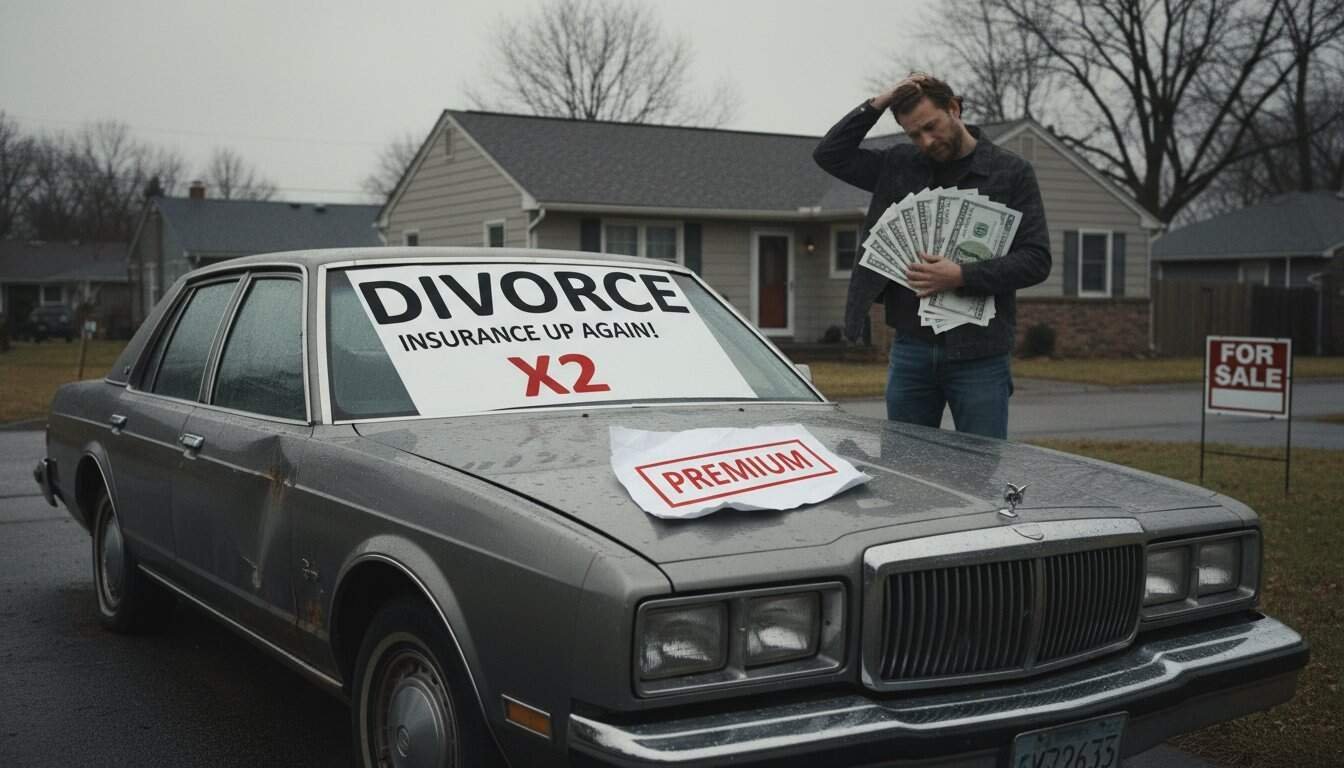

  • Insurance Rates After a Divorce: Why They Rise and How to Lower Them

    Insurance Rates After a Divorce: Why They Rise and How to Lower Them

    Divorce is heavy. Emotions run high, and money can feel tight. If your bills just jumped, you are not imagining it. Many people see insurance rates increase after a divorce, especially for auto coverage.

    Here is the good news. You can understand why prices change and take steps to cut costs fast. In this guide, you will learn why rates may rise, how divorce affects auto, health, life, and home or renters insurance, smart ways to save, and a simple post-divorce checklist. In 2025, auto rates for divorced drivers tend to be higher than for married drivers, often around 15 percent on average, but your driving record, credit, and location usually matter more for your final price. Take clear steps now to avoid gaps and lock in savings right away.

    Why do insurance rates go up after a divorce?

    After a split, you move from shared plans to solo coverage. Discounts tied to marriage and multi-car policies often vanish. Credit can dip during this time, and address changes shift your risk profile. Simple changes on a policy can also trigger a new rate. The result is a higher bill, even when you drive the same way.

    Marital status can affect price, but it is only one factor. Your driving record, credit, garaging address, and claims history usually play a bigger role in the final rate.

    Loss of married and multi-car discounts raises your base price

    Joint auto policies often include married and multi-car discounts. When you separate policies, that built-in savings often disappears. Even if nothing else changes, this loss can bump your auto rate.

    For a helpful overview on splitting policies and common changes after a divorce, see Experian’s guide, What to Know About Car Insurance After a Divorce.

    Compare car insurance quotes online to save money on coverage.

    New home, new risk: address, parking, and mileage changes

    Moving changes how insurers rate your risk. Street parking instead of a garage, a busier neighborhood, or a longer commute can raise your premium. Traffic patterns shift risk too.

    Tell your insurer where the car sleeps at night and your real annual mileage. Accurate data helps you avoid pricing errors and claim issues.

    Credit and life changes can bump your risk score

    Money stress is common after a divorce. Missed payments or higher balances can lower credit, and in many states, that can raise your insurance price. This link is strong for auto and home insurance.

    Simple steps help. Pay on time, lower balances, and avoid opening new accounts unless you must. Small wins add up, and better credit can lead to lower rates over time.

    Policy changes and lapses can trigger higher rates

    Removing an ex, retitling a car, or changing addresses can cause an insurer to re-rate your policy. That is normal. What hurts more is a coverage gap. A lapse makes you look riskier later, and many insurers charge more when you restart.

    Start your new policy before you cancel the old one. Match dates so there is no gap, even by a day.

    How divorce affects each type of insurance

    Divorce touches many lines of coverage. Here is what usually changes and what to do next.

    Auto insurance after divorce: what usually happens

    Most couples split one joint policy into two solo policies. You lose married and multi-car discounts, you set a new garaging address, and you may need to update a title or registration before removing an ex. Divorced drivers often pay more than married drivers on average, around 15 percent, but shopping around can offset this difference. American Family Insurance covers common steps in plain terms in Does Being Divorced Affect Your Car Insurance?.

    Practical must-dos:

    • Move each vehicle to the policy of the person who owns and drives it.
    • List teen drivers where the car is kept most of the time.
    • Remove your ex as a driver and as a contact after titles change.
    • Ask about any new driver exclusions if applicable in your state.

    For another perspective on why rates may rise and what to update, see Car Insurance After a Divorce.

    Health insurance after divorce: coverage options and deadlines

    If you were on your spouse’s plan, divorce counts as a qualifying life event. You can enroll in COBRA or a Marketplace plan during a special enrollment window, often 60 days from the divorce. Compare premium, deductible, out-of-pocket max, and doctor networks. Keep your kids covered and update dependents on the right plan.

    Quick tip:

    • If you need care soon, COBRA maintains the same network, but it often costs more.
    • Marketplace plans can be cheaper with subsidies, but check doctors and meds first.

    Life insurance after divorce: beneficiaries and court orders

    Update your beneficiaries right away. Some courts require life insurance to secure child support or alimony. If you must buy a new policy, your rate depends on age, health, and policy type. Keep proof of coverage, keep contact data current, and store documents where both you and the court can access them if needed.

    Home or renters insurance after divorce: splitting coverage

    If one person keeps the home, remove the ex from the policy when ownership changes. If both of you move, set up new renters or homeowners coverage for your new place. Update personal property lists, install or update locks, and review liability limits. Ask about bundling with auto for a discount. For a deeper look at home coverage changes, see How Divorce Can Impact Your Home Insurance Rates.

    Vow exchange during outdoor wedding ceremony at sunset with guests, floral arch, and wedding cake.
    Romantic outdoor wedding ceremony at sunset with bride and groom exchanging vows and floral decor.

    Smart ways to lower insurance costs after a divorce

    You can cut costs this month with a few focused moves. Start with shopping and policy cleanup, then add discounts and driving data tools.

    Shop and compare quotes, then bundle where it makes sense

    Get quotes from 3 to 5 insurers or use a broker. Compare the same limits, deductibles, and coverages. If rates are close, bundling auto with home or renters often trims the total bill. Activate your new policy, then cancel the old one to avoid gaps.

    Fine-tune your policy: deductibles, limits, and add-ons

    Raising deductibles can lower premiums, but pick an amount you can pay in cash. Keep liability limits high enough to protect income and assets. Drop extras you do not need, like duplicate roadside coverage if your credit card already covers it. Remove your ex as a driver and as a contact.

    Use discounts you may qualify for

    You might have more savings than you think:

    • Safe driver, accident-free, or claims-free
    • Good student for teens
    • Defensive driving course
    • Pay-in-full, autopay, and paperless
    • Anti-theft devices and VIN etching
    • Alumni, military, or employer groups
    • Smoke detectors and water shutoff devices for home

    Ask your agent to review every discount in one call.

    Compare car insurance quotes easily and save with GOAT Coverage’s online platform.
    Modern two-story office building with large windows, brown siding, and landscaped front yard.

    Drive data can help: try a telematics program

    Usage-based programs track braking, speed, time of day, and mileage. Safe habits can earn a discount, sometimes right away. Programs vary by insurer, so results differ. Review privacy terms, test with one car first, and decide if the savings are worth it.

    Post-divorce insurance checklist and timeline

    Small steps in the right order can save money and stress. Use this quick blueprint.

    Before the divorce is final: prepare your coverage

    • List every policy and asset. Note policy numbers, premiums, and renewal dates.
    • Gather VINs, driver info, and home details.
    • Get quotes for separate auto, renters or homeowners, and any umbrella coverage.
    • Set reminders for key dates, like court hearings and renewal cycles.
    • Confirm who pays each bill until the decree.

    Right after the decree: switch policies without a gap

    • Start your new policy the same day the joint policy ends.
    • Update titles, registrations, and mortgage or escrow records.
    • Remove your ex from your policy and from online or phone access.
    • Keep ID cards and proof of coverage handy in your wallet and glove box.

    Within 30 to 60 days: health, life, and legal updates

    • Use the health special enrollment window or COBRA if needed.
    • Update life insurance beneficiaries and any coverage required by the court.
    • Change addresses, emergency contacts, and payment methods on all policies.
    • Keep digital copies of confirmations and proofs of coverage.

    FAQs about insurance rates after a divorce

    Will my car insurance always go up after a divorce?

    Many people pay more after a divorce, on average around 15 percent compared to married drivers. A clean record, strong credit, and smart shopping can cut or erase the increase. Bundle where it makes sense and ask for every discount.

    Can I stay on my ex-spouse’s auto policy?

    After a divorce, you need your own policy. During separation, keep coverage active until your new policy starts. Never drive without active insurance.

    What if my ex stops paying a policy that still lists me?

    Get your own policy right away. Ask the insurer to remove you from the old plan. A lapse can raise rates and cause legal trouble, so act fast.

    Does separation count for health insurance changes?

    Plan rules vary. Divorce is a qualifying life event for most employer plans and the Marketplace. Ask your plan about options during separation and get dates in writing.

    How do kids’ policies work after a divorce?

    One parent is usually the primary policyholder. List the teen driver where the car is kept most of the time. Keep medical coverage active and share ID cards in both homes.

    Compare car insurance quotes and save with GOAT Coverage.
    A courtroom scene with a judge, attorneys, and jury, emphasizing fair and transparent insurance comparisons.

    Current auto insurance costs: divorced vs married in 2025

    Insurers price risk with many factors, but marital status still matters in average data. Market-wide increases affect everyone, yet the gap between groups tends to hold.

    Marital StatusAverage Annual Full Coverage Rate (2025)Rate Difference vs. Married
    Married$1,652Base rate
    Divorced$1,900+15% or +$248 per year

    Keep in mind that overall auto insurance rates for many drivers have risen about 7.5 percent in 2025. That rise affects both groups, but individual pricing still depends on your record, credit, claims, and location.

    For more context on what to expect and how to manage policy changes during and after a split, the brief article Will your insurance costs go up after a divorce? highlights common trends and actions to consider.

    Conclusion

    Rates can rise after divorce because married and multi-car discounts end, and your risk profile changes. Auto insurance often shifts first, while health and life need quick updates to avoid gaps. Take action today. Compare quotes, bundle when it helps, set deductibles you can afford, and ask for every discount. Switch policies without a gap and use health enrollment windows to keep coverage continuous. You have more control than you think, and steady steps now can lighten the financial load in the months ahead.

  • Facing DUI Charges in Alton, IL? Here’s What Every Driver Needs to Know

    Facing DUI Charges in Alton, IL? Here’s What Every Driver Needs to Know

    If you’re reading this, chances are you or someone you care about is dealing with a DUI situation in Alton, Illinois. Take a deep breath—you’re not alone, and understanding what you’re up against is the first step toward protecting your future. Let’s break down everything you need to know about DUI laws in our community, from the legal consequences to the financial impact on your insurance, and most importantly, what you can do about it.

    What Counts as a DUI in Alton and Throughout Illinois?

    Here in Illinois, the law defines driving under the influence as operating a vehicle with a blood alcohol concentration (BAC) of 0.08% or higher. But here’s something many people don’t realize: you can still face DUI charges even if you’re below that limit if an officer believes you’re impaired and can’t drive safely.

    DUI in Illinois includes:

    • Driving with a BAC of 0.08% or more (0.04% for commercial drivers)
    • Being impaired by alcohol to the point where you can’t drive safely
    • Having any amount of illegal drugs in your system
    • A THC concentration of 5 nanograms or more in blood or 10 nanograms in other bodily substances within 2 hours of driving
    • Being impaired by prescription medication or over-the-counter drugs

    Yes, you read that right—even legal medications can land you with a DUI if they impair your driving. The Alton Police Department, with their 57 sworn officers, actively patrols our streets looking for impaired drivers, especially during peak hours between 11 PM and 4 AM on weekends.

    Zero Tolerance for Young Drivers

    If you’re under 21, Illinois doesn’t mess around. Any amount of alcohol above 0.00% can lead to DUI charges for drivers under 21. This zero-tolerance policy means that single beer at a party could cost you your license and your future opportunities.

    Accident scene with police officer and man in rain, highlighting importance of car insurance coverage.
    Compare car insurance quotes easily and save on your policy with GOAT Coverage.

    The Real Penalties: What You’re Actually Facing

    Let’s talk straight about what happens if you’re convicted. A first DUI in Illinois is a Class A misdemeanor carrying up to 364 days in jail and fines up to $2,500. But that’s just the beginning of your troubles.

    First Offense DUI Penalties

    Criminal Penalties:

    • Up to one year in jail (though many first-timers avoid jail time)
    • Fines reaching $2,500
    • Mandatory drug and alcohol evaluation
    • Possible community service requirements

    License Consequences:

    • Minimum one-year license revocation (two years if you’re under 21)
    • Immediate suspension upon arrest—even before conviction
    • SR-22 insurance requirement for three years

    Enhanced Penalties: If your BAC is 0.16% or higher, you face at least a $500 fine and 100 hours of community service. Had a child under 16 in the car? Add up to six months imprisonment, a mandatory $1,000 fine, and 25 days of community service.

    Friendly group hug at community gathering in a warm, welcoming indoor setting for social connection.
    A diverse group of people sharing a heartfelt hug during a community event, creating a warm and friendly atmosphere.

    Second DUI: Things Get Serious

    A second conviction brings mandatory minimum imprisonment of five days or 240 hours of community service, and a five-year license revocation if the offense occurs within 20 years of the first. Remember, Illinois has no “lookback period”—every DUI stays on your record forever and counts toward repeat offenses.

    Third DUI: Now It’s a Felony

    Illinois considers a third DUI within five years a Class 4 felony with three to seven years in prison possible and a ten-year license revocation. You’ve now entered felony territory, which means losing voting rights, job opportunities, and facing a permanent criminal record that follows you everywhere.

    The Insurance Nightmare Nobody Warns You About

    Here’s where things get really expensive, and honestly, this is what catches most people off guard. A DUI doesn’t just cost you in court—it’s going to hammer your wallet for years through insurance rates.

    How Much Will Your Insurance Skyrocket?

    After a DUI conviction, car insurance premiums typically increase by 300%, meaning you could go from $600 to $2,400 or higher in annual premiums. Let that sink in. In Alton and throughout Madison County, you’re looking at an extra $1,800 per year—money that could have gone toward your mortgage, your kids’ education, or just living your life.

    Illinois car insurance averages $1,532 with a clean record but jumps to $2,604 after a DUI—an increase of $1,072 annually. And this isn’t a one-year problem. A DUI typically impacts car insurance rates in Illinois for up to five years or longer, with some insurers continuing higher rates beyond that.

    The SR-22 Requirement

    Illinois law mandates that individuals convicted of a DUI must obtain an SR-22 certificate, which verifies they carry minimum required liability insurance. This certificate alone comes with filing fees and automatically brands you as high-risk, ensuring your rates stay elevated.

    What insurance companies might do:

    • Drop you entirely from your current policy
    • Require you to get high-risk insurance at astronomical rates
    • Demand the SR-22 filing, which stays on your record for three years
    • Apply surcharges for seven years or longer in some cases

    Some Alton residents have reported insurance increases of over $1,000 annually after a DUI. For a working family already stretched thin, this can be devastating.

    DUI Statistics: The Reality in Our Community

    Let’s look at the numbers, because understanding the scope of this issue helps put things in perspective:

    Illinois DUI Facts:

    • In a recent year, Illinois recorded 21,975 DUI arrests statewide, with 91% receiving suspended or revoked licenses
    • 87% of those arrested were first-time offenders
    • The average person arrested is 34 years old, male, and has a BAC of 0.17—more than twice the legal limit
    • Most arrests happen between 11 PM and 4 AM on weekends
    • Men account for about 74% of DUI arrests

    The Tragedy Factor: Nationally, one person was killed in a drunk driving crash every 39 minutes, with alcohol-related crashes accounting for 32% of all traffic fatalities. In Illinois, hundreds of families are torn apart each year by impaired driving incidents.

    Right here in Alton, our police department works alongside Madison County law enforcement and the Illinois State Police to keep our roads safe. While specific Alton arrest numbers fluctuate, we’re part of the Metro-East region that sees its share of DUI enforcement, especially along Highway 67 and near entertainment districts along the riverfront.

    What Happens When You Get Pulled Over?

    Understanding the process helps you make better decisions in the moment:

    The Stop: An officer needs reasonable suspicion to pull you over—maybe you were weaving, speeding, or ran a stop sign. Once stopped, they’re looking for signs of impairment: bloodshot eyes, slurred speech, alcohol smell, open containers.

    Field Sobriety Tests: You’ll likely be asked to perform physical tests—walking a straight line, standing on one leg, following a pen with your eyes. These tests are subjective and can be challenged by an experienced attorney.

    Chemical Testing: Here’s where Illinois’ implied consent law kicks in. By driving on Illinois roads, you’ve already consented to chemical testing. Refusing means automatic license suspension—and it’s even longer than if you’d failed the test.

    Refusal Penalties:

    • First offense refusal: One-year suspension
    • Subsequent refusal: Three-year suspension
    • The prosecution will use your refusal against you in court

    Can You Beat a DUI Charge?

    Compare car insurance quotes with GOAT Coverage to save on coverage options.
    Attractive police officer and woman in a city street, promoting car insurance comparison.

    Yes, but it requires experienced legal help. Potential defenses include arguing the officer lacked valid reason to stop your vehicle, challenging the arrest procedures, or questioning the reliability of breathalyzer or blood test results.

    Common Defense Strategies:

    • Illegal traffic stop: If the officer didn’t have probable cause, everything after that might be thrown out
    • Improper testing procedures: Breathalyzers must be properly calibrated and administered
    • Medical conditions: Certain conditions can affect BAC readings
    • Rising BAC defense: Your BAC may have been legal while driving but rose by the time of testing
    • Violation of constitutional rights: Errors in how evidence was collected

    Why Hiring an Attorney Matters

    Listen, I get it—legal fees seem expensive. But compare that to years of insurance hikes, potential jail time, job loss, and a criminal record. The prosecution must disclose all evidence prior to trial, including police reports, breathalyzer results, and witness statements, and an experienced attorney knows how to use this to your advantage.

    A skilled DUI lawyer in Alton can:

    • Challenge the legality of your stop and arrest
    • Negotiate for reduced charges or court supervision
    • Potentially get charges dismissed based on procedural errors
    • Help you avoid a conviction on your record
    • Guide you through license reinstatement procedures

    The Hidden Costs Nobody Mentions

    Beyond court fines and insurance, a DUI conviction affects your life in ways you might not expect:

    Employment Impact:

    • Many employers run background checks
    • Professional licenses (nursing, teaching, commercial driving) may be suspended or revoked
    • Some jobs require driving—good luck explaining why you can’t
    • Missing work for court dates, jail time, or community service

    Personal Consequences:

    • Difficulty renting apartments or getting loans
    • College admission complications
    • Loss of reputation in a close-knit community like Alton
    • Strain on family relationships and friendships
    • Mandatory alcohol education or treatment programs

    Travel Restrictions: Some countries, including Canada, can deny entry to anyone with a DUI conviction on their record.

    What Should You Do Right Now?

    If you’re facing DUI charges in Alton, time is critical. Here’s your action plan:

    Immediate Steps:

    1. Don’t talk to anyone except your attorney about your case—anything you say can be used against you
    2. Document everything you remember about the stop and arrest
    3. Request a hearing within 90 days to contest your license suspension
    4. Hire an experienced DUI attorney who knows Madison County courts
    5. Don’t miss any court dates—that makes everything worse

    For Your License: You have a limited window to request an administrative hearing to fight your license suspension. This is separate from your criminal case and equally important. Many people lose this opportunity simply because they don’t know about it or wait too long.

    Prevention: The Best Defense

    Look, the best way to handle a DUI is to never get one in the first place. Here in Alton, we have options:

    Smart Alternatives:

    • Designated drivers (seriously, just rotate who stays sober)
    • Uber and Lyft operate throughout Alton and the Metro-East
    • Local cab companies serve the area
    • Stay where you are—sleep it off safely
    • Plan ahead if you know you’ll be drinking

    The Math: A rideshare from downtown Alton to your home might cost $20-30. Compare that to the $10,000+ total cost of a DUI conviction (including fines, attorney fees, insurance increases, and lost wages). It’s not even close.

    Court Supervision: A Possible Lifeline

    For first-time offenders, Illinois offers something called “court supervision”—essentially a probationary period where if you complete all requirements and stay out of trouble, the DUI doesn’t become a conviction on your record. This is huge for your insurance and future employment.

    However, this option isn’t guaranteed. You typically need:

    • A first-time offense
    • No aggravating factors (no accidents, no children in the car, BAC not extremely high)
    • An attorney who knows how to negotiate for it
    • Completion of all court-ordered programs

    Resources in Alton and Madison County

    Alton Police Department

    Madison County Circuit Court

    • Handles DUI cases for Alton residents
    • Located in Edwardsville, IL

    Local DUI Attorneys

    • Search for attorneys specializing in DUI defense in Madison County
    • Look for experience with local judges and prosecutors

    Illinois Criminal Justice Information Authority

    Support Services: If alcohol is a problem in your life, getting help shows the court you’re taking responsibility and can help your case.

    Compare car insurance quotes and save with GOAT Coverage.
    A courtroom scene with a judge, attorneys, and jury, emphasizing fair and transparent insurance comparisons.

    The Bottom Line

    A DUI charge in Alton, Illinois is serious business with consequences that ripple through every aspect of your life for years. But it’s not the end of the world. With proper legal representation and by taking the situation seriously, many people successfully minimize the damage and move forward.

    Remember these key takeaways:

    • Don’t face this alone—get experienced legal help immediately
    • Time is critical—you have deadlines for challenging your license suspension
    • Insurance costs will hurt—prepare for years of higher premiums
    • Multiple DUIs become felonies—don’t let a first offense become a pattern
    • Prevention is everything—make smart choices before you’re in this situation

    Whether you’re dealing with a first offense or facing more serious charges, understanding Illinois DUI laws gives you power. Use that knowledge to make informed decisions, protect your rights, and work toward the best possible outcome.

    Stay safe out there, Alton. Our community is better when we all look out for each other—on the roads and in the tough times.


    Disclaimer: This blog post provides general educational information about DUI laws in Illinois and is not legal advice. Every DUI case is unique and requires personalized legal guidance. If you’re facing DUI charges, consult with a qualified attorney immediately to discuss your specific situation.


    Frequently Asked Questions About DUI in Alton, IL

    Q: Can I refuse a breathalyzer test in Illinois? A: Technically yes, but Illinois’ implied consent law means you’ll face automatic license suspension for refusing—often longer than if you’d taken and failed the test. Your refusal can also be used against you in court.

    Q: How long does a DUI stay on my record in Illinois? A: Forever. Illinois has no lookback period, meaning every DUI conviction stays on your record permanently and counts toward future offenses.

    Q: Will I definitely go to jail for a first DUI? A: Not necessarily. Many first-time offenders avoid jail time, especially with good legal representation. However, jail time is possible—up to one year for a Class A misdemeanor.

    Q: Can I drive to work during my license suspension? A: Possibly. You may be eligible for a Monitoring Device Driving Permit (MDDP) or Restricted Driving Permit (RDP) that allows limited driving for work, school, medical appointments, and alcohol treatment. You’ll need to install an ignition interlock device and pay monthly fees.

    Q: How quickly do I need to hire an attorney? A: Immediately. You only have 90 days from your arrest to request a hearing to fight your license suspension, and evidence preservation is time-sensitive.

    Q: What if I was only taking prescription medication? A: If your prescription medication impaired your ability to drive safely, you can still be charged with DUI. Even legal medications come with warnings about operating machinery—and your car qualifies.

    Q: Will my insurance company find out about my DUI? A: Yes. Insurance companies regularly check driving records, and they’ll definitely find out when you’re required to file an SR-22 certificate proving you have insurance.


    Keywords: DUI Alton IL, Alton Illinois DUI lawyer, Madison County DUI, Illinois DUI penalties, DUI insurance rates Illinois, first DUI offense Illinois, DUI attorney Alton, Illinois drunk driving laws, DUI consequences, Alton police DUI, Metro-East DUI, Illinois DUI defense


    Reference Links

  • .08 DUI in Illinois: What Happens Next and How to Protect Your License

    .08 DUI in Illinois: What Happens Next and How to Protect Your License

    A .08 DUI in Illinois can shake your week, your job, and your budget. Take a breath. You can take smart steps now to protect your license and build a strong plan.

    In Illinois, .08 BAC is the legal limit for drivers age 21 and over. A test at or above .08 can trigger both a criminal DUI charge and a separate license suspension. This guide walks you through the stop, testing rules, penalties, license suspension, court steps, and the moves that help most. This information reflects Illinois practices as of 2025. Deadlines come fast, so early action matters.

    Pulled over at .08 in Illinois: what happens next

    Police officer using breathalyzer to test driver's alcohol level outside car. Photo by Łukasz Promiler

    From traffic stop to arrest: the usual DUI timeline

    • Reason for the stop: Officers can stop you for weaving, speeding, equipment issues, or at a checkpoint.
    • Officer observations: They note odor of alcohol, glassy eyes, slurred speech, or fumbling for documents.
    • Field sobriety tests: You may be asked to perform walk-and-turn, one-leg stand, or eye tests.
    • Preliminary breath test: A handheld test at the roadside can help decide whether to arrest, but it is not the official test used in court.
    • Arrest and station: If the officer has probable cause, expect arrest, transport to the station, and a request for an official breath, blood, or urine test.

    You might receive tickets, a Notice of Summary Suspension, bond papers, and a court date. Read everything. The clock is already ticking.

    Testing, refusal, and implied consent in Illinois

    Illinois uses implied consent. By driving on Illinois roads, you agree to chemical testing after a lawful DUI arrest. Officers can request breath, blood, or urine. If you refuse, your license suspension is longer than if you fail the test.

    • Test failure at .08 or higher, shorter suspension.
    • Test refusal, longer suspension, and it can affect your case strategy.

    Illinois treats refusals and high BACs seriously. Courts and prosecutors track both.

    Your license after arrest: summary suspension notice

    A DUI arrest does not wait for a conviction to hit your license. Illinois uses a statutory summary suspension when you fail or refuse a post-arrest test. Typical lengths:

    • Failed test at .08 or higher, 6 months
    • Refused test, 12 months

    Your suspension usually starts 46 days after you are served notice. That gap gives you time to plan driving relief or request a hearing. For a clear overview of how the automatic suspension works, see this plain-English guide on the 45-day waiting period before a suspension begins. You can also explore how a statutory summary suspension works in Illinois.

    You can request a hearing to challenge the suspension. The deadline is strict. Ask a DUI lawyer right away.

    Illinois DUI penalties at .08 BAC: first offense, refusal, and high BAC

    Penalties shift based on your record, your BAC, whether there was a crash, and other facts. Here is the plain version for a first DUI at .08 or higher.

    First-time DUI penalties: what you are facing

    • Class A misdemeanor for a first DUI
    • Up to 1 year in jail, but most first-time cases do not result in max time
    • Fines up to $2,500, plus court costs and a steep insurance jump
    • Possible alcohol education or treatment as part of sentencing
    • Community service or other conditions are common

    For a helpful overview of first-time outcomes, this short explainer on what happens to your Illinois license after a first-time DUI outlines typical steps and options.

    Compare car insurance quotes easily with GOAT Coverage for better savings on your policy.
    Drive smarter: Get multiple quotes, compare, and save on your car insurance today.

    License suspension rules and BAIID ignition interlock

    • Failed test at .08 or higher, 6-month suspension
    • Refusal, 12-month suspension

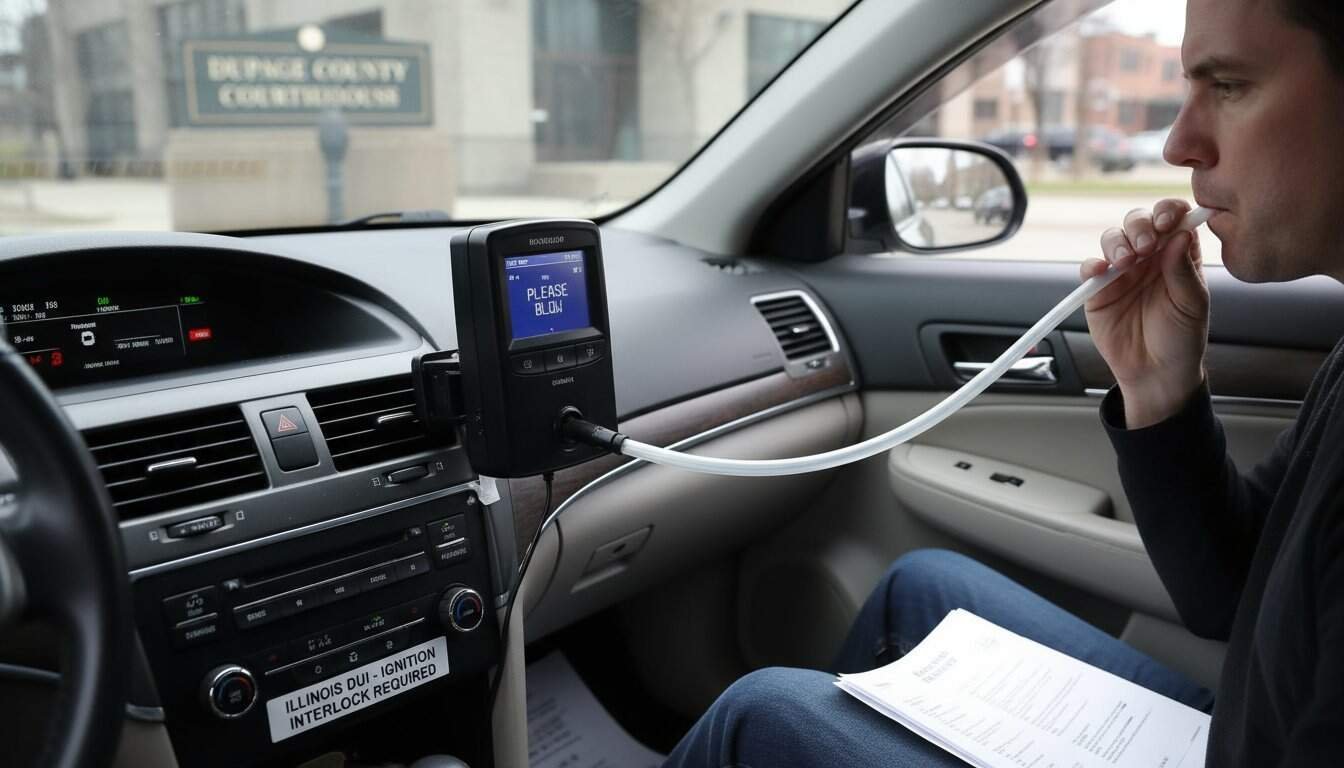
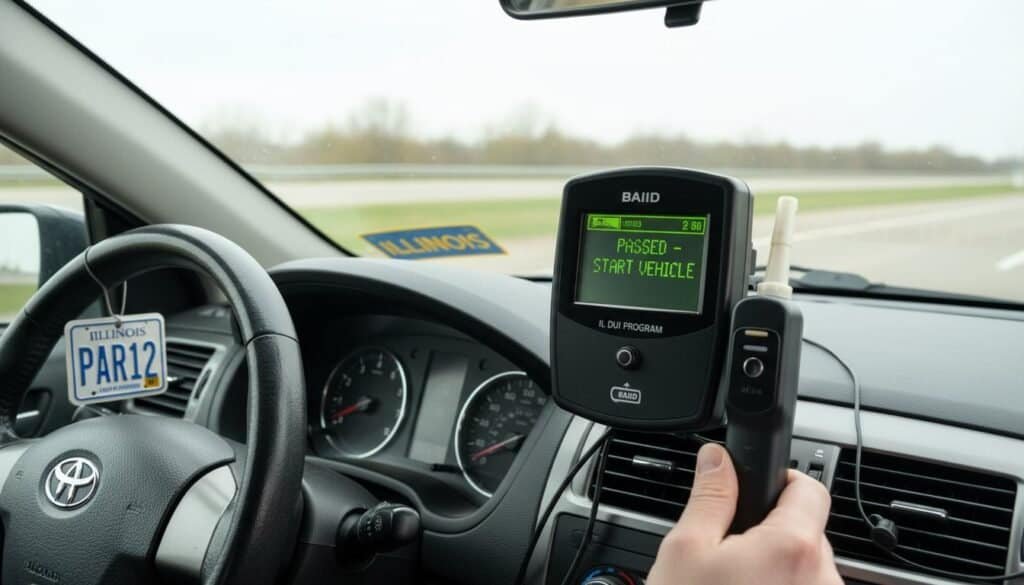
    Many first-time offenders qualify to keep driving during the suspension with a BAIID, a Breath Alcohol Ignition Interlock Device. You blow to start the car and sometimes while driving. If alcohol is detected, the car will not start, and violations are recorded.

    Ask about a Monitoring Device Driving Permit that lets you drive for work, school, and family needs with a BAIID. Timing matters, and setup takes planning.

    If BAC is .16 or higher, or you refused the test

    • A BAC of .16 or higher brings tougher consequences. Expect higher fines and at least 100 hours of community service on a first offense, and potential mandatory jail time in some cases.
    • Refusal often means a longer suspension. It can change plea options and your defense approach.

    Speak with a lawyer about which path, test failure or refusal, creates more risk in your situation.

    Under 21 and commercial drivers: special rules

    • Under 21: Illinois has zero tolerance. Any alcohol can trigger penalties, even below .08.
    • Commercial drivers: For CDL holders in a commercial vehicle, the limit is .04. A DUI can also disqualify a CDL and cause job loss.

    CDL and under-21 cases move fast, and the stakes are higher.

    Court process after a .08 DUI in Illinois: steps and outcomes

    Stay calm. The court process follows a clear track. A local DUI lawyer can guide you through each step, explain your choices, and push for the best result.

    Arraignment: your first court date

    You will hear your charge, receive paperwork, and enter a plea. Most people plead not guilty at this stage. The court sets future dates. Ask about discovery, motions, and license issues right away. This brief overview on whether your license is suspended automatically after a DUI arrest explains the split between your criminal case and the separate license suspension.

    Pre-trial: defenses, negotiations, and paths forward

    Your lawyer reviews the stop, bodycam, breath or blood testing, and reports. They may file motions to suppress or exclude evidence. Negotiations can include reduced charges, court supervision, classes, and BAIID eligibility. The goal is a result that protects your record and keeps you driving legally.

    Trial and sentencing: what the judge can order

    At trial, the state must prove you drove or were in actual physical control, and that you were impaired or at .08 or higher. If found guilty, the judge can order fines, community service, treatment, and BAIID. Supervision is often available for first-time offenders and can help you avoid a conviction if you complete all terms.

    Smart next steps: protect your license, job, and record

    Time is your friend if you act quickly. Here is a simple plan for the first days and weeks.

    Move fast: hire a DUI lawyer and track deadlines

    Request a hearing and gather helpful evidence

    • Request a license-related hearing before the deadline.
    • Collect receipts, medical records, and witness names.
    • Write down what happened while it is fresh, including times and what you ate or drank.
    • Save proof of work schedules, rides, or childcare plans if you need hardship driving relief.

    Plan for work, car insurance, and money

    • Set up rides or BAIID if allowed so you can keep working.
    • Expect higher insurance costs. Call your agent and plan for the increase.
    • Budget for court fees, classes, and device costs.
    • Do not miss court dates or classes. That can lead to warrants and more penalties.

    Common mistakes to avoid after a DUI arrest

    • Ignoring mail or deadlines
    • Posting case details on social media
    • Driving while suspended
    • Skipping court or court-ordered programs

    2025 Illinois DUI updates: what changed and why it matters

    Illinois continues to focus on safety and compliance. The trends below can affect choices after arrest.

    Refusals and high BAC cases face tougher responses

    • Refusing a chemical test brings longer suspensions, and repeat refusals can mean several years without a license.
    • Very high BAC cases often face added penalties and closer monitoring.
    • These shifts can change legal strategy. Discuss the pros and cons of a refusal versus a failed test with your lawyer early.

    For a broader rundown of what happens after an Illinois DUI arrest and how to prepare, this quick guide on post-arrest steps and rights is a helpful read.

    More focus on cannabis and other drugs

    • Police are using more tools to spot drug impairment.
    • Courts look at alcohol and drug factors together.
    • For cannabis, Illinois uses THC limits similar to alcohol rules. A blood THC level of 5 ng/ml, or 10 ng/ml in other bodily fluids within two hours of driving, can trigger a DUI charge. This matters because THC can linger after impairment fades, so testing and timing are key.

    Conclusion

    A .08 DUI in Illinois brings two fast-moving tracks, the criminal charge and the license suspension. Your best move is quick, informed action. Ask a DUI lawyer to review your stop and tests, request a hearing on the suspension, and explore BAIID so you can keep driving legally. Strong cases are built early, with clean timelines, smart paperwork, and steady follow-through. Make measured decisions today to protect your license, your job, and your future.

  • Multi-Car Vehicle Insurance Discounts: How to Qualify, Stack Savings, and Pay Less in 2025

    Multi-Car Vehicle Insurance Discounts: How to Qualify, Stack Savings, and Pay Less in 2025

    Want a lower auto bill without cutting coverage? If your household runs two or more cars, you can unlock multi-car vehicle insurance discounts that trim the price per car. Insurers love when you keep more than one vehicle under the same account, so they reward you with a lower rate on each one.

    A multi-car discount is a price reduction for insuring 2 or more vehicles with the same auto insurer. In 2025, typical savings range from about 8% to 25% per car, depending on the company, state, and your driver profile. Brands that advertise these discounts include GEICO and Amica (up to 25%), Progressive (about 12%), State Farm (up to 12%), Travelers (around 8%), and AAA (varies by club). Some companies add more savings when you bundle auto with home or renters.

    This guide breaks down how multi-car discounts work, who qualifies, how to stack savings, and how to compare quotes the smart way. You will also see simple math examples so the savings feel real

    Affordable car insurance quotes consultation with happy couple and agent at home.
    A couple discussing car insurance quotes with an agent sitting on their living room couch.

    Multi-Car Vehicle Insurance Discounts: How to Qualify, Stack Savings, and Pay Less in 2025

    Want a lower auto bill without cutting coverage? If your household runs two or more cars, you can unlock multi-car vehicle insurance discounts that trim the price per car. Insurers love when you keep more than one vehicle under the same account, so they reward you with a lower rate on each one.

    A multi-car discount is a price reduction for insuring 2 or more vehicles with the same auto insurer. In 2025, typical savings range from about 8% to 25% per car, depending on the company, state, and your driver profile. Brands that advertise these discounts include GEICO and Amica (up to 25%), Progressive (about 12%), State Farm (up to 12%), Travelers (around 8%), and AAA (varies by club). Some companies add more savings when you bundle auto with home or renters.

    This guide breaks down how multi-car discounts work, who qualifies, how to stack savings, and how to compare quotes the smart way. You will also see simple math examples so the savings feel real.

    How Multi-Car Vehicle Insurance Discounts Work (And Who Qualifies)

    Insure two or more cars with the same company, and each car often gets a lower rate than if you put them on separate policies. Some carriers apply the discount when the vehicles share one policy. Others can apply it across linked policies under the same account. Exact rules change by company and state.

    Simple Definition and How the Savings Apply Per Car

    A multi-car discount reduces the premium when 2 or more vehicles are listed under the same policy or account family. The savings usually apply to each listed vehicle, not only the second one. The cars need to be rated together at the same address in most cases. Prices still depend on driver history, age, and the vehicles themselves, which is why results vary.

    For a quick explainer on how insurers structure multi-car pricing and eligibility, see this short guide on how to get a multi-car insurance discount.

    Comparison of futuristic robots promoting social media chatbots for free in a city skyline background.e digital brain says Try Fast Bots Free. Get a chat for your social media Fun.
    Futuristic robots advertising social media chatbots for free with city skyline at night.

    Who Usually Qualifies (Household, Roommates, Teens)

    Most companies look for simple, consistent info:

    • Two or more cars insured with the same company
    • Same physical or garaging address for the cars
    • All household drivers disclosed, including teens
    • Garaging address matches where each car is kept

    Family members at the same address almost always qualify. Many carriers also allow roommates at the same address. Teens and college students who live at home or return on breaks count. Leased and financed cars qualify when listed and insured correctly.

    Multi-Car vs. Multi-Policy vs. Bundling

    These terms sound similar but work differently:

    • Multi-car discount: Two or more cars with one auto insurer.
    • Multi-policy or bundling: Auto plus another line, like home, renters, condo, or umbrella.
    • Stacking: Some insurers apply both multi-car and bundling at once.

    Ask your agent whether multi-vehicle, multi-driver, and bundle discounts can combine with other perks like paperless or pay-in-full. Guides like CNBC Select’s review of the best car insurance discounts of 2025 can help you spot stackable deals, including strong multi-vehicle savings from big brands.

    When a Multi-Car Policy May Not Be Cheapest

    There are exceptions:

    • A high-risk driver can raise the price for the whole policy.
    • Specialty or classic cars might rate better with a niche carrier.
    • If cars live at different addresses, eligibility can break.
    • Some states have unique rules that change the math.

    Get quotes both ways, all together and split out, then compare totals. For rate context and sample pricing leaders, see MoneyGeek’s analysis of the cheapest multi-car insurance companies.

    Comparison of car insurance quotes at a dealership lot under a FLOW branded archway and signage, with professionals shaking hands and discussing coverage options.
    Compare car insurance quotes online and save with GOAT Coverage.

    How Much You Can Save in 2025 (Real Numbers and Brands)

    Discounts vary by state, risk level, and underwriting. Treat these as typical ranges, then confirm with a quote tied to your address and driving record.

    Typical Savings Range in 2025

    Most drivers see roughly 8% to 25% per car when they insure multiple vehicles with one company. The higher end usually requires clean records, the right state, and meeting all eligibility rules. The discount lowers the rate, but the base price still depends on your record, age, and vehicle type.

    For brand-by-brand discount snapshots and other stackable deals, this overview of best car insurance discounts in 2025 is a helpful reference.

    Top Companies Offering Multi-Car Deals Today

    Insurers advertise different ranges, and not all states publish exact percentages. Common examples:

    • GEICO and Amica: Up to 25% multi-car savings, depending on eligibility. See this quick breakdown of best discounts for multiple cars.
    • Progressive: About 12% on average when you add more than one vehicle.
    • State Farm: Often around 10% to 12% for multi-vehicle in many markets.
    • Travelers: Frequently around 8% or more, varies by state.
    • AAA: Varies by local club and your profile.

    Some industry roundups also list American Family and State Farm among brands that can reach higher savings in select markets, which is why quotes matter. See a broader sweep of brand discount claims here: best multi-vehicle auto insurance discounts in 2025.

    If you want an overall view of insurer quality and options beyond just the discount percent, check the rankings of the best car insurance companies.

    New Ways to Boost Savings in 2025

    Bundling auto with home or renters is hot right now, and many carriers say it can deliver a strong extra price break. Some brands, like American Family, aggressively promote bundle savings alongside multi-car. Most carriers also throw in smaller breaks for paperless billing, paying in full, and starting the quote online. USAA offers bundle savings for eligible military families.

    A lot of these extras stack with multi-car. Review a discount guide to see what else you can add, like Insurance.com’s quick list of common savings, including bundling and good driver deals, in its auto insurance discounts guide for 2025.

    What Else Changes Your Final Price

    Four factors still do the heavy lifting:

    • Location: State and ZIP shape your base rate.
    • Driving record and claims: Tickets and at-fault accidents add cost.
    • Coverage and deductibles: Higher limits and low deductibles cost more.
    • The cars: Age, safety tech, and repair costs matter.

    A discount will not erase a major ticket or crash. Raise deductibles only if you can cover them in cash.

    Multi-car car insurance comparison for home and auto coverage with discounts.
    Compare multi-car auto insurance quotes to save on home and vehicle coverage.

    Qualify, Stack Discounts, and Keep the Savings Year-Round

    Follow this plan to lock in your discount, stack extra savings, and avoid surprises after life changes.

    Quick Eligibility Checklist and What to Gather

    Have these ready before you shop:

    • Driver names and license numbers
    • VINs and annual mileage for each car
    • Garaging address for each vehicle
    • Lienholder or lease info, if financed
    • Current coverages and deductibles
    • All household drivers listed
    • All cars rated at the same address (unless the insurer allows an exception)

    Stack With Other Discounts the Right Way

    Layer your savings in a clean order:

    • Start with multi-car: Add all vehicles to the same insurer.
    • Bundle next: Add home, renters, condo, or umbrella when it makes sense.
    • Then request extras: Paperless, auto-pay, pay-in-full, online quote, safe driver, good student, defensive driving.

    Rules vary, so ask the agent to apply everything you qualify for. Keep documents handy for student grades or course completion. For a quick refresher on how different discounts combine and where the ceiling usually sits, skim this list of best car insurance discounts of 2025.

    Smart Tips for Families With Teens or New Drivers

    • Add teen drivers to the household policy. This protects eligibility and often prices better than a separate policy.
    • Ask about good student and driver education discounts.
    • Compare pricing with and without an older vehicle on liability only for a teen.
    • Tell your insurer if a student lives away at school without a car, which can reduce the rating factor for that driver.

    Keep Your Discount After Life Changes

    Life moves, cars change, roommates come and go. Update your insurer right away when you:

    • Move to a new address
    • Add, trade, or sell a car
    • Add a driver or someone new moves in
    • Change how a car is used, like starting a new commute

    If you do not update, your policy could be re-rated, you could face a surcharge, or the discount could drop.

    Compare Quotes and Switch With Confidence

    A strong discount does not always mean the best price. Compare offers for the best total value, including coverage, claims support, and perks.

    Step-by-Step to Get Accurate Multi-Car Quotes

    1. List all drivers and all vehicles.
    2. Decide on your coverage limits and deductibles before you shop.
    3. Get quotes from at least three national brands and one regional carrier.
    4. Ask to apply the multi-car discount and all other eligible discounts.
    5. Compare six-month and twelve-month policy terms.
    6. Save each written quote and review line by line.

    To see which carriers tend to price multi-car policies competitively right now, scan MoneyGeek’s data-backed look at the cheapest multi-car insurance companies.

    Key Questions to Ask Before You Buy

    • Does my multi-car discount stack with my bundle discount?
    • What happens if I remove a car mid-term?
    • Are roadside and rental car options priced per car, or per policy?
    • Are there fees for paying monthly instead of in full?
    • Is accident forgiveness available, and how does it apply to each driver?

    Common Mistakes That Cost People Money

    Avoid these budget killers:

    • Listing different addresses for cars kept at the same home
    • Forgetting to add a new driver who lives in the home
    • Mismatching coverage levels across cars without a plan
    • Skipping bundling when you already have home or renters
    • Not asking for paperless, auto-pay, or pay-in-full deals
    • Not re-shopping at renewal, especially after tickets fall off

    For a side-by-side of which companies pitch strong multi-car savings and how they compare, this roundup of best discounts for multiple cars is useful. Pair that with a broader discount overview to plan your stack, like Insurance.com’s 2025 discounts guide.

    Affordable car insurance savings comparison on tablet with charts and financial documents.
    Car insurance savings comparison chart showing potential annual savings before and after.

    Quick Math Examples to Estimate Your Savings

    Here are two simple scenarios to make the savings feel concrete.

    • Example 1: Two cars at 1,400 dollars each, 12% multi-car discount
      • Base premium: 1,400 + 1,400 = 2,800 dollars
      • Discount: 12% of each car = 168 dollars per car
      • Total discount: 336 dollars
      • New total: 2,800 − 336 = 2,464 dollars
      • Savings per car: 168 dollars
    • Example 2: Three cars at 1,200 dollars each, 20% multi-car discount, plus a 5% bundle discount on the total
      • Base premium: 1,200 × 3 = 3,600 dollars
      • Multi-car discount: 20% per car = 240 dollars per car
      • Total multi-car discount: 720 dollars
      • Subtotal after multi-car: 3,600 − 720 = 2,880 dollars
      • Bundle discount: 5% of 2,880 = 144 dollars
      • Final total: 2,880 − 144 = 2,736 dollars
      • Total savings: 864 dollars

    If you want real-world brand context while running your own math, this quick guide to multi-car insurance discounts is a handy companion.

    Conclusion

    Insuring two or more vehicles with the same company can trim about 8% to 25% per car in 2025. Brands like GEICO and Amica advertise the higher end in many markets, while Progressive, State Farm, Travelers, and AAA also offer meaningful savings that vary by state. Stack multi-car with bundling, paperless, and pay-in-full to push the price even lower. Compare 3 to 5 quotes, keep all drivers and cars updated, and re-shop at renewal.

    Quick checklist: gather driver and vehicle info, ask to stack discounts, get written quotes, compare totals with equal coverage, and pick the best overall value. Ready to save? Get three quotes today, ask for every discount you qualify for, and lock in the best total price for your household.

  • What Is SR-22 Insurance in Illinois? (And How to Get It Without Getting Ripped Off)

    What an SR-22 Really Is (And Why Illinois Makes You File One)

    Let’s clear up the first myth: an SR-22 is not insurance.
    It’s a state-required proof of financial responsibility form filed by your insurance company to the Illinois Secretary of State showing you carry the minimum required liability coverage.

    Illinois requires it when the state has lost trust in you as a driver.
    And yes — that usually means: DUI, driving with no insurance, license suspension, major accident without coverage, or multiple serious violations.

    In other words:
    📌 SR-22 = “I screwed up, and now the state wants proof I’m insured — every single day — or they suspend me again.”

    • Founded: 1990
    • Headquarters: Chicago, Illinois
    • States Available: 46 states
    • Best For: High-Risk Drivers, SR-22 Filing
    • Average Annual Premium: $1,600-$2,200 full coverage

     Kemper focuses on non-standard and preferred risk auto insurance, providing coverage for drivers with various driving records. The company offers competitive rates for high-risk drivers and maintains strong financial stability. Kemper provides flexible payment options and comprehensive coverage through both agents and direct channels.

    • ✓ SR-22 filing available
    • ✓ High-risk specialist
    • ✓ Online and agent quotes
    • ✓ Flexible payment options
    • ✓ 24/7 claims service
    • ✓ Roadside assistance available
    • Phone: 1-800-578-7221
    • Website: www.kemper.com
    • Claims: 1-800-833-0355
    • Hours: 24/7

    How Long You Have to Carry SR-22 in Illinois

    Standard period: 3 years
    ✅ Timer starts after your license is reinstated — not before
    ❌ If your policy lapses, the 3-year clock restarts
    ❌ If you cancel insurance before the end of the SR-22 requirement, the state automatically suspends your license again

    So yes — keeping the policy active matters more than anything else.

    The Real Cost of SR-22 in Illinois (Not Just the Filing Fee)

    People get excited when they hear:

    “It’s only a $15–$35 filing fee.”

    Yeah. The filing fee is nothing.
    The real cost is the insurance premium increase once you’ve been labeled “high-risk.”

    Average increases in Illinois:

     
    Situation Typical Extra Per Year
    First-time DUI +$1,000 to $1,800
    Driving uninsured +$600 to $1,200
    License suspension +$500 to $1,000
    Multiple violations +$1,500+

    Why? Because the SR-22 tells the insurer:

    “This driver is now legally risky AND monitored by the state.”

    Insurers don’t like that. So they raise the price — or drop you completely.

    Which Insurance Companies File SR-22 in Illinois?

    The companies that actively file SR-22 in Illinois include:


    How to Get the Cheapest SR-22 in Illinois (Real Advice, Not Fluff)

    🔹 1. Don’t ask a standard agent

    State Farm + Allstate may deny or overprice you.
    You need non-standard carriers who handle high-risk customers every day.

    🔹 2. Shop online SR-22 specialist insurers

    They file instantly, no lecture, no office visit, no judgment.

    🔹 3. Choose liability only (unless your car is financed)

    Full coverage + SR-22 = way more expensive.

    🔹 4. Pay monthly if you can’t afford full premium

    Illinois DMV only cares that the policy stays active.

    🔹 5. If you don’t own a car, get non-owner SR-22 insurance

    Way cheaper + still reinstates your license.

    🔹 6. File early

    Don’t wait until court date or reinstatement day — delays = suspended license.

    What Happens If Your SR-22 Policy Lapses?

    Your insurance company is required by law to notify the state using an SR-26 cancellation form.

    That triggers:

    ❌ Immediate license re-suspension
    ❌ Your 3-year SR-22 clock resets
    ❌ Possible fines or jail time if caught driving
    ❌ Higher premiums when you reapply

    SR-22 is like probation — you don’t miss payments.

    SR-22 vs FR-44 vs Regular Insurance (Quick Breakdown)

    Type What It Means Used For
    SR-22 Proof of minimum coverage Illinois + most states
    FR-44 Higher liability required Florida, Virginia (not IL)
    Regular Policy No monitoring Standard drivers

    Illinois only uses SR-22, not FR-44.

    Step-By-Step: How to Get SR-22 Filed in Illinois Today

    • Get a quote from a company that actually handles SR-22s

    • Buy a policy (liability only is fine unless loan/lease requires full coverage)

    • The insurer electronically files SR-22 with the Illinois SOS

    • Wait for confirmation — then apply for reinstatement

    • Drive legally again

    Total time: Same day if you choose the right company.

    Where to Get the Best Illinois SR-22 Rates

    🛑 Don’t wait until the court date or reinstatement deadline.
    The longer you delay, the more you pay — and the longer you stay suspended.

    ✅ Get SR-22 quotes from Illinois providers who file instantly
    ✅ No office visit, no judgment, no waiting period
    ✅ Cheap non-owner SR-22 available if you don’t own a car

    Final Word

    An SR-22 isn’t a prison sentence — it’s paperwork.
    You can still get insured, still drive legally, and still save money if you shop smart and don’t let the policy lapse.

    The state wants one thing: proof you’re insured for 3 straight years.
    Do that, and the SR-22 disappears like it never happened.

    Screw it up?
    You restart the clock — and pay more.

    Sources & Official Illinois References

    Illinois Secretary of State – SR-22 Financial Responsibility Filing
    Explains when Illinois requires an SR-22, how long it must be carried, and how insurers file it.
    https://www.ilsos.gov/departments/drivers/drivers_license/safety_sr.html

    Illinois License Reinstatement & Fees (SOS)
    Step-by-step guide to reinstating a suspended license after DUI or no insurance.
    https://www.ilsos.gov/departments/drivers/drivers_license/reinstatement.html

    Illinois Minimum Auto Insurance Requirements
    Lists the mandatory liability limits every Illinois driver (including SR-22 drivers) must carry.
    https://www.ilsos.gov/departments/vehservices/insurance/minimum_requirements.html

    Illinois DUI Laws & Penalties (Act ID 1833)
    Full Illinois statute covering DUI penalties, SR-22 triggers, and license suspension rules.
    https://www.ilga.gov/legislation/ilcs/ilcs.asp?ActID=1833

  • Celebrate Your 25th Birthday with Major Car Insurance Savings

    Celebrate Your 25th Birthday with Major Car Insurance Savings

    Your 25th birthday isn’t just a milestone—it could be your gateway to the greatest coverage and biggest savings you’ve ever had. That’s right: as you blow out the candles on your quarter-century cake, the insurance gods may just reward you. If you’ve been putting off switching, tracking quotes, or just waiting to get good rates—now’s your time.


    Why Turning 25 Often Means Paying Less for Car Insurance

    Insurance companies don’t pick 25 out of thin air. There are solid, statistical reasons behind it.

    • Many carriers report average premiums drop when drivers hit age 25. For example, according to one major insurer: “At age 25 and up, premiums decrease significantly compared to younger age brackets.”
    • Driving experience improves. Fewer tickets, fewer crashes, fewer high-risk behaviors that younger drivers often exhibit.
    • Your risk profile changes. From a data standpoint, someone ages 25–29 is statistically less risky than someone ages 19–24.

    This means that for many drivers who are clean and smart, the birthday of 25 triggers a savings event rather than just another trip around the sun.


    Celebrating a birthday with friends around a cake, pool, and luxury sports car at night.
    Happy birthday party with friends, cake and luxury car under colorful lights.

    Big Savings? Yes. But It’s Not Automatic

    Hold on—before you assume you’ll automatically pay less the minute you turn 25, let’s be real about how it works.

    Here are the factors that influence whether you see a drop

    • Driving record: If you’ve had accidents, tickets, or claims in recent years, your premium might not drop much. Mercury Insurance+1
    • Vehicle type & safety features: High-performance cars, luxury models, or vehicles with expensive repair parts can keep your rate high. Mercury Insurance
    • Credit score / ZIP code / location: Many insurers factor these in, so even at age 25 you might still pay more if those other factors aren’t strong. MoneyGeek.com
    • Policy structure & renewal timing: You might turn 25 mid-term and your premiums won’t drop until renewal or until you switch companies.

    What this means for you

    If you’re turning 25 and your car insurance is still up, you have two choices:

    1. Wait for your renewal and hope the carrier automatically adjusts.
    2. Shop around actively—get new quotes, leverage your birthday milestone, and lock in the savings. Because yes, you earned that birthday bonus.

    Your 25th=Your Lucky Day: How to Make It Work

    Since this is your birthday era, let’s treat the savings like a party. Here’s how to make your birthday deal real, not just theoretical.

    Step-by-Step Action Plan

    • Start with tracking your current rate: What are you paying now? Write it down.
    • Request new quotes: Visit multiple insurers, enter your clean record and your age 25 milestone.
    • Compare coverage levels: Don’t just compare price—compare what you’re covered for (liability, collision, comprehensive, deductibles).
    • Bundle if you can: If you have renters/homeowners insurance, bundle it with auto for added savings.
    • Ask about 25+ driver discounts: Use your age as the trigger. “I turned 25 and am ready for the next tier of savings.”
    • Check for other discounts: Good student, safe driver, defensive driving course, low mileage, etc. These stack up.
    • Switch smartly: If your renewal is months away but a significantly lower quote is available, consider switching early for the savings now.
    • Lock it in: Once you find a great rate, act. Birthday deals don’t wait.

    What kind of savings can you expect?

    Data from multiple sources shows:

    • Drivers ages 25–29 on average pay significantly less than younger drivers.
    • For example, one table shows full coverage premiums lowered by ~10–14% when moving from age 24 to 25.
      So yes, the savings are real. The faster you act, the more likely you lock in.

    Exclusive rates for drivers turning 25. Get your car insurance quote now!.
    Bright purple and yellow graphic with car, coins, and gift illustrations promoting car insurance savings.

    The “Birthday Bonus” Mindset: Make It Fun & Strategic

    You’re turning 25—so treat this like you found a secret deal. Celebrate it. Make it memorable.

    • Use the phrase: “My 25th birthday means I’m entering the low-rate zone.”
    • Post a “Happy birthday to me, and my wallet” graphic on social if you want.
    • Tell yourself you deserve great coverage and great savings.
    • Use it as a conversation starter: “I turned 25—my insurer said my rate might drop. I’m switching to lock in the savings.”
    • And yes—make sure you get the quote then and there.

    Final Checklist – Did You Cover All the Bases?

    • Clean driving record
    • Age 25 milestone reached
    • Vehicle is reasonably insured (not over-insured)
    • Bundle option considered
    • Multiple quotes compared
    • Real discount locked in

    If you tick off those boxes, you’ll be treating your birthday like a finance win instead of just another year older.


    Why This Matters for Your Financial Future

    It’s not just about today: getting solid rates at 25 sets you up for years of savings.

    • Lower premiums mean more cash in your pocket to invest, save, or spend how you choose.
    • The coverage you lock in now can build positive loyalty or no-claim history, leading to longer‐term discounts.
    • You’ll avoid the trap where you “just stayed with the same old insurer” and missed out on meaningful savings.

    Wrap-Up — Happy Birthday, and Happy Savings

    Turning 25 isn’t just about getting older—it’s about getting smarter. You’ve already grown, matured, and proved your driving skills. Now let your insurance rate reflect that. Don’t wait. Don’t assume. Switch today and require the coverage you deserve and the savings you’ve earned.

    Here’s to you: the birthday driver, the savvy saver, the one who finally said “it’s time to lock in the real deal.” Let your 25th year be the one where you upgrade your life—and your insurance.

    Happy woman celebrating birthday outdoors near pool and sports car at night.
    A young woman joyfully celebrates her birthday outdoors with a cake, pool, and sleek sports car in the background.

  • Join Us as Affiliate Partners in Marketing Insurance Services

    Join Us as Affiliate Partners in Marketing Insurance Services

    Seeking Affiliate Partners

    Our Company, is are dedicated to providing valuable content related to auto, car, homeowners, business, and life insurance. To enhance our offerings, we are looking for affiliate partners who we can effectively market their services to our audience. If you specialize in insurance services, auto and home related categories and wish to expand your reach, this could be a great collaboration opportunity.

    Why Advertise Online with Us?

    Our blog has cultivated a growing readership interested in insurance topics. As an affiliate partner, you will gain access to a targeted audience that is actively seeking solutions in the insurance realm. By working together, you can leverage our platform to advertise online in an engaging and informative manner, helping potential customers easily discover your services.

    How to Collaborate

    If you believe that your services align with our content themes and audience interests, we invite you to connect with us. Our team is excited about the prospect of establishing partnerships that can drive value for both parties. For those interested in this affiliate marketing opportunity, please contact us via email. Let’s discuss how we can create a successful marketing collaboration together!

    Teams@DigiMktgCo.com

  • Best Cheap Car Insurance Companies for Low Rates in 2025

    Best Cheap Car Insurance Companies for Low Rates in 2025

    Based on current market analysis, rate comparisons, and customer satisfaction data, here are the carriers consistently delivering competitive rates for budget-conscious drivers.

    Looing at Insurance policy on a tablet
    Goat Coverage will help you compare rates.

    GEICO tops the list for most standard-risk drivers seeking cheap car insurance with low rates. Their average annual premium for minimum coverage runs about $450 to $550 in most states, while full coverage averages $1,200 to $1,500. GEICO’s digital platform makes comparison shopping easy, and their discount programs are comprehensive. They offer emergency roadside assistance, mechanical breakdown coverage, and rental car reimbursement as add-ons.

    State Farm provides excellent value, particularly for drivers who bundle policies. Their local agent network offers personalized service that digital-only carriers can’t match, which becomes valuable when you need to file a claim. State Farm’s Drive Safe & Save telematics program can deliver substantial savings for safe drivers. Average annual premiums for full coverage range from $1,400 to $1,700, with minimum coverage around $500 to $650.

    Progressive excels at insuring higher-risk drivers. If you have a less-than-perfect driving record, Progressive often beats competitors by significant margins. Their Name Your Price tool lets you set a target budget and then shows coverage options that fit. The Snapshot telematics program is robust and can save up to 30% for safe drivers. Full coverage averages $1,500 to $1,800 annually.

    USAA consistently ranks as the cheapest option—but it’s only available to military members, veterans, and their families. If you qualify, USAA’s rates typically undercut competitors by 15% to 40%, and their customer service ratings are exceptional. Full coverage averages around $1,100 to $1,400 annually.

    Nationwide offers solid rates for standard-risk drivers and has particularly competitive prices in the Midwest. Their SmartRide telematics program provides meaningful discounts, and they offer a wide variety of coverage options and riders. Full coverage runs $1,400 to $1,700 on average.

    Erie Insurance operates in 12 states (primarily in the Northeast and Midwest) but consistently delivers some of the lowest rates in their service area. They’re particularly competitive for drivers with good credit and clean records. Full coverage averages $1,200 to $1,500.

    The General specializes in non-standard insurance and serves drivers with poor credit, multiple violations, or DUI convictions. While their rates are higher than standard carriers for clean-record drivers, they’re often the most affordable option for high-risk profiles. Expect full coverage between $2,000 and $3,500 annually after a DUI.

    J.D. Power’s annual insurance satisfaction studies provide reliable data on customer experience, claims handling, and pricing competitiveness across major carriers.

    Remember this: The “best” insurer for your neighbor might not be the best for you. Rating factors vary so dramatically between carriers that the only way to find your cheapest option is to compare personalized quotes based on your specific profile

    Sketch of an older gentleman Holding car keys.
    Got a Deal on some cheap insurance and he is ready to go.

    Coverage Levels Explained: How to Balance Cost and Protection

    Choosing the right coverage level is where many drivers either overpay or leave themselves dangerously exposed. Let me break down what you actually need versus what insurance companies try to sell you.

    State minimum coverage is the cheapest option—but it’s often inadequate. Every state requires liability insurance that covers bodily injury and property damage you cause to others. Minimum limits vary dramatically: California requires just 15/30/5 ($15,000 per person/$30,000 per accident for injury, $5,000 for property damage), while Alaska mandates 50/100/25.

    Here’s the problem: medical costs and vehicle repairs in 2025 far exceed these minimums. A moderate injury requiring emergency room treatment and follow-up care can easily top $50,000. If you cause a serious accident with minimum coverage, you’re personally liable for damages exceeding your policy limits. That means wage garnishment, property liens, and potential bankruptcy.

    Recommended liability limits: Most insurance professionals suggest at least 100/300/100 coverage. Yes, it costs more—typically $100 to $300 extra annually—but it provides meaningful protection. If you have significant assets to protect, consider even higher limits or an umbrella policy.

    Collision and comprehensive coverage protect your vehicle. Collision pays for damage from accidents regardless of fault; comprehensive covers theft, vandalism, weather damage, and animal strikes. These coverages are optional if you own your vehicle outright, but required if you have a loan or lease.

    The calculation is simple: If your vehicle is worth less than $3,000 to $4,000, and your annual collision and comprehensive premium exceeds $400 to $500, you’re probably better off self-insuring. Take that premium money and put it into a savings account for your next vehicle.

    Compare car insurance quotes and save with GOAT Coverage sign on rural roadside.
    Sign promoting GOAT Coverage for comparing car insurance quotes.

    Uninsured/underinsured motorist coverage protects you when you’re hit by a driver with inadequate insurance. About 13% of drivers nationally carry no insurance, according to the Insurance Information Institute, with rates topping 20% in some states. This coverage is relatively inexpensive—often $50 to $150 annually—and absolutely worth adding.

    Medical payments or personal injury protection (PIP) covers your medical expenses after an accident, regardless of fault. PIP is required in no-fault states and offers broader protection than medical payments coverage. If you have excellent health insurance, you might skip medical payments coverage, but review your health plan’s auto accident exclusions first.

    Rental reimbursement and roadside assistance are affordable add-ons that can save you hundreds in out-of-pocket costs. Rental reimbursement (typically $30 to $50 per day) pays for a rental car while yours is being repaired. Roadside assistance covers towing, lockouts, fuel delivery, and tire changes—usually for $10 to $20 annually.

    Gap insurance matters if you financed your vehicle with a small down payment. New cars depreciate 20% to 30% in the first year. If your car is totaled and you owe more than it’s worth, gap insurance covers the difference. You can buy this through your insurer or at the dealership, but insurer rates are typically 50% to 70% cheaper.

    Insurance sales Banner
    Get a Free Quote today
  • How to Find Cheap Car Insurance with Low Rates (Even After a DUI)

    How to Find Cheap Car Insurance with Low Rates (Even After a DUI)

    Finding affordable car insurance doesn’t have to feel impossible—even if you’re dealing with a DUI on your record. I’ve spent years analyzing insurance markets, comparing carrier policies, and helping drivers navigate the complicated world of auto coverage. Here’s the thing: most people overpay for car insurance because they don’t understand how rates are calculated or where to find legitimate discounts.

    The average American driver pays around $1,730 per year for full coverage car insurance, according to recent industry data. But that number jumps dramatically if you’re considered a high-risk driver. A DUI conviction can increase your premiums by 80% or more, pushing annual costs above $3,000 in many states. That’s a real financial burden—but it’s not permanent, and there are concrete steps you can take right now to lower those rates.

    Whether you’re shopping for your first policy, looking to switch carriers, or trying to rebuild your insurance profile after a DUI, this guide will walk you through everything you need to know. You’ll learn how insurers actually calculate rates, which discounts you might be missing, and how to compare quotes effectively. Let’s break down the strategies that actually work.

     Person comparing car insurance quotes on laptop with calculator and paperwork
    Shopping for cheap car insurance requires understanding how carriers calculate your rates

    Understanding How Car Insurance Rates Are Actually Calculated

    Before you can lower your car insurance costs, you need to understand what you’re working with. Insurance companies use complex algorithms to assess risk, but the factors they weigh aren’t secret. Your driving record, age, location, credit score, vehicle type, and coverage choices all play significant roles in determining your premium.

    Driving history matters most. If you’ve been in accidents or received traffic violations, insurers view you as a higher risk. A clean driving record over three to five years can qualify you for safe driver discounts ranging from 10% to 30%. Conversely, a DUI conviction signals major risk—it tells insurers you’ve engaged in behavior that dramatically increases the likelihood of future claims.

    According to the Insurance Information Institute, drivers with a DUI pay an average of $1,400 more per year for coverage compared to those with clean records. Some states see even steeper increases. In California, for example, a DUI can raise your rates by 92%, while in North Carolina, the increase averages around 340%.

    Your location impacts rates more than you’d think. Urban areas with higher traffic density, theft rates, and accident frequency typically command higher premiums. State minimum coverage requirements also vary—Michigan and Florida historically have some of the most expensive insurance markets due to no-fault laws and high fraud rates, while states like Maine and Vermont often see lower average premiums.

    Credit-based insurance scores (where legally permitted) can affect your rates by hundreds of dollars annually. Insurers have found statistical correlations between credit management and claim filing patterns. If your credit score is below 600, you might pay 70% more than someone with excellent credit, even with identical driving records.

    The type of vehicle you drive also factors in. High-performance sports cars, luxury vehicles, and models with poor safety ratings cost more to insure. Conversely, mid-size sedans with strong safety features and lower theft rates typically qualify for better rates. If you’re shopping for cheap car insurance with low rates, consider how your vehicle choice impacts your premium.

    Chart showing factors affecting car insurance rates including driving record, location, and vehicle type, book cover, bold shapes, hard edges, street art, trending on artstation, by Leesha Hannigan, Ross Tran, Thierry Doizon, Kai Carpenter, Ignacio Fernández Ríos
    The little things that affect car insurance

    Proven Strategies to Lower Your Car Insurance Premiums

    Actually, there are more ways to reduce your insurance costs than most drivers realize. Let me walk you through the strategies that consistently deliver results.

    Shop around aggressively. This is the single most effective way to save money. Rates for identical coverage can vary by $1,000 or more between carriers. You should compare quotes from at least five different companies annually. Use comparison tools, but also get quotes directly from major carriers like State Farm, GEICO, Progressive, and Allstate, as well as regional insurers that might offer competitive rates in your area.

    The National Association of Insurance Commissioners reports that comparison shopping can save drivers between 15% and 40% on annual premiums, depending on their profile and location.

    Bundle your policies. Multi-policy discounts are among the easiest savings to capture. If you combine your auto insurance with homeowners or renters coverage through the same carrier, you’ll typically save 15% to 25% on both policies. That adds up to hundreds of dollars per year for most households.

    Increase your deductible strategically. Moving from a $500 deductible to $1,000 can lower your premium by 15% to 30%. Just make sure you have enough saved to cover the higher out-of-pocket cost if you need to file a claim. This strategy works best if you’re a safe driver unlikely to need coverage frequently.

    Ask about lesser-known discounts. Insurance companies offer dozens of discount programs, but they won’t always advertise them proactively:

    • Defensive driving courses: Completing an approved course can save 5% to 10%
    • Low mileage discounts: Driving under 7,500 miles annually often qualifies you for savings
    • Paperless billing: Some insurers discount 3% to 5% for digital communications
    • Pay-in-full discounts: Paying your annual premium upfront instead of monthly can save 5% to 10%
    • Professional affiliations: Members of certain organizations, unions, or employers may qualify for group rates
    • Good student discounts: If you’re under 25 and maintain a B average or higher, you might save 10% to 20%
    • Anti-theft devices: Factory-installed or aftermarket security systems can reduce premiums
    • Automatic payments: Setting up autopay might qualify you for a small discount

    Consider usage-based insurance programs. Telematics programs like Progressive’s Snapshot, State Farm’s Drive Safe & Save, or Allstate’s Drivewise monitor your actual driving behavior through a mobile app or plug-in device. If you demonstrate safe driving habits—avoiding hard braking, limiting late-night driving, and maintaining steady speeds—you can save up to 30% on your premium.

    According to research from the Casualty Actuarial Society, usage-based insurance programs have shown promising results in rewarding genuinely safe drivers with meaningful discounts.

    Review your coverage annually. As your vehicle ages and depreciates, you might no longer need comprehensive and collision coverage. Once your car is worth less than 10 times your annual premium, it’s often more cost-effective to drop these coverages and self-insure for physical damage. Just maintain liability coverage to protect yourself financially if you’re at fault in an accident.

    Woman reviewing car insurance policy documents with highlighted sections, digital painting, artstation, concept art, donato giancola, Joseph Christian Leyendecker, WLOP, Boris Vallejo, Breathtaking, 8k resolution, extremely detailed, beautiful, establishing shot, artistic, hyperrealistic, beautiful face, octane render, cinematic lighting, dramatic lighting, masterpiece
    The Stress of raising insurance premiums, causing her to melt way.

    Time is your ally. As your DUI ages, its impact on your rates gradually decreases. You’ll see your first meaningful rate drop around the three-year mark in most states. By the five-year point, some insurers will treat you similarly to standard-risk drivers, especially if you’ve maintained a spotless record since the incident.

    Consider state-assigned risk pools as a last resort. If you absolutely cannot find coverage in the private market, every state operates an assigned risk plan that guarantees basic coverage to any licensed driver. These policies are expensive—often 2 to 3 times standard rates—but they keep you legal while you work on rebuilding your insurance profile.

    The Insurance Research Council has published extensive research on high-risk driver markets and state-assigned risk programs, offering valuable insights into how these systems function.

    Continue Reading – Best Cheap Car Insurance Companies for Low Rates in 2025