Tag: DUI

  • Facing DUI Charges in Alton, IL? Here’s What Every Driver Needs to Know

    Facing DUI Charges in Alton, IL? Here’s What Every Driver Needs to Know

    If you’re reading this, chances are you or someone you care about is dealing with a DUI situation in Alton, Illinois. Take a deep breath—you’re not alone, and understanding what you’re up against is the first step toward protecting your future. Let’s break down everything you need to know about DUI laws in our community, from the legal consequences to the financial impact on your insurance, and most importantly, what you can do about it.

    What Counts as a DUI in Alton and Throughout Illinois?

    Here in Illinois, the law defines driving under the influence as operating a vehicle with a blood alcohol concentration (BAC) of 0.08% or higher. But here’s something many people don’t realize: you can still face DUI charges even if you’re below that limit if an officer believes you’re impaired and can’t drive safely.

    DUI in Illinois includes:

    • Driving with a BAC of 0.08% or more (0.04% for commercial drivers)
    • Being impaired by alcohol to the point where you can’t drive safely
    • Having any amount of illegal drugs in your system
    • A THC concentration of 5 nanograms or more in blood or 10 nanograms in other bodily substances within 2 hours of driving
    • Being impaired by prescription medication or over-the-counter drugs

    Yes, you read that right—even legal medications can land you with a DUI if they impair your driving. The Alton Police Department, with their 57 sworn officers, actively patrols our streets looking for impaired drivers, especially during peak hours between 11 PM and 4 AM on weekends.

    Zero Tolerance for Young Drivers

    If you’re under 21, Illinois doesn’t mess around. Any amount of alcohol above 0.00% can lead to DUI charges for drivers under 21. This zero-tolerance policy means that single beer at a party could cost you your license and your future opportunities.

    Accident scene with police officer and man in rain, highlighting importance of car insurance coverage.
    Compare car insurance quotes easily and save on your policy with GOAT Coverage.

    The Real Penalties: What You’re Actually Facing

    Let’s talk straight about what happens if you’re convicted. A first DUI in Illinois is a Class A misdemeanor carrying up to 364 days in jail and fines up to $2,500. But that’s just the beginning of your troubles.

    First Offense DUI Penalties

    Criminal Penalties:

    • Up to one year in jail (though many first-timers avoid jail time)
    • Fines reaching $2,500
    • Mandatory drug and alcohol evaluation
    • Possible community service requirements

    License Consequences:

    • Minimum one-year license revocation (two years if you’re under 21)
    • Immediate suspension upon arrest—even before conviction
    • SR-22 insurance requirement for three years

    Enhanced Penalties: If your BAC is 0.16% or higher, you face at least a $500 fine and 100 hours of community service. Had a child under 16 in the car? Add up to six months imprisonment, a mandatory $1,000 fine, and 25 days of community service.

    Friendly group hug at community gathering in a warm, welcoming indoor setting for social connection.
    A diverse group of people sharing a heartfelt hug during a community event, creating a warm and friendly atmosphere.

    Second DUI: Things Get Serious

    A second conviction brings mandatory minimum imprisonment of five days or 240 hours of community service, and a five-year license revocation if the offense occurs within 20 years of the first. Remember, Illinois has no “lookback period”—every DUI stays on your record forever and counts toward repeat offenses.

    Third DUI: Now It’s a Felony

    Illinois considers a third DUI within five years a Class 4 felony with three to seven years in prison possible and a ten-year license revocation. You’ve now entered felony territory, which means losing voting rights, job opportunities, and facing a permanent criminal record that follows you everywhere.

    The Insurance Nightmare Nobody Warns You About

    Here’s where things get really expensive, and honestly, this is what catches most people off guard. A DUI doesn’t just cost you in court—it’s going to hammer your wallet for years through insurance rates.

    How Much Will Your Insurance Skyrocket?

    After a DUI conviction, car insurance premiums typically increase by 300%, meaning you could go from $600 to $2,400 or higher in annual premiums. Let that sink in. In Alton and throughout Madison County, you’re looking at an extra $1,800 per year—money that could have gone toward your mortgage, your kids’ education, or just living your life.

    Illinois car insurance averages $1,532 with a clean record but jumps to $2,604 after a DUI—an increase of $1,072 annually. And this isn’t a one-year problem. A DUI typically impacts car insurance rates in Illinois for up to five years or longer, with some insurers continuing higher rates beyond that.

    The SR-22 Requirement

    Illinois law mandates that individuals convicted of a DUI must obtain an SR-22 certificate, which verifies they carry minimum required liability insurance. This certificate alone comes with filing fees and automatically brands you as high-risk, ensuring your rates stay elevated.

    What insurance companies might do:

    • Drop you entirely from your current policy
    • Require you to get high-risk insurance at astronomical rates
    • Demand the SR-22 filing, which stays on your record for three years
    • Apply surcharges for seven years or longer in some cases

    Some Alton residents have reported insurance increases of over $1,000 annually after a DUI. For a working family already stretched thin, this can be devastating.

    DUI Statistics: The Reality in Our Community

    Let’s look at the numbers, because understanding the scope of this issue helps put things in perspective:

    Illinois DUI Facts:

    • In a recent year, Illinois recorded 21,975 DUI arrests statewide, with 91% receiving suspended or revoked licenses
    • 87% of those arrested were first-time offenders
    • The average person arrested is 34 years old, male, and has a BAC of 0.17—more than twice the legal limit
    • Most arrests happen between 11 PM and 4 AM on weekends
    • Men account for about 74% of DUI arrests

    The Tragedy Factor: Nationally, one person was killed in a drunk driving crash every 39 minutes, with alcohol-related crashes accounting for 32% of all traffic fatalities. In Illinois, hundreds of families are torn apart each year by impaired driving incidents.

    Right here in Alton, our police department works alongside Madison County law enforcement and the Illinois State Police to keep our roads safe. While specific Alton arrest numbers fluctuate, we’re part of the Metro-East region that sees its share of DUI enforcement, especially along Highway 67 and near entertainment districts along the riverfront.

    What Happens When You Get Pulled Over?

    Understanding the process helps you make better decisions in the moment:

    The Stop: An officer needs reasonable suspicion to pull you over—maybe you were weaving, speeding, or ran a stop sign. Once stopped, they’re looking for signs of impairment: bloodshot eyes, slurred speech, alcohol smell, open containers.

    Field Sobriety Tests: You’ll likely be asked to perform physical tests—walking a straight line, standing on one leg, following a pen with your eyes. These tests are subjective and can be challenged by an experienced attorney.

    Chemical Testing: Here’s where Illinois’ implied consent law kicks in. By driving on Illinois roads, you’ve already consented to chemical testing. Refusing means automatic license suspension—and it’s even longer than if you’d failed the test.

    Refusal Penalties:

    • First offense refusal: One-year suspension
    • Subsequent refusal: Three-year suspension
    • The prosecution will use your refusal against you in court

    Can You Beat a DUI Charge?

    Compare car insurance quotes with GOAT Coverage to save on coverage options.
    Attractive police officer and woman in a city street, promoting car insurance comparison.

    Yes, but it requires experienced legal help. Potential defenses include arguing the officer lacked valid reason to stop your vehicle, challenging the arrest procedures, or questioning the reliability of breathalyzer or blood test results.

    Common Defense Strategies:

    • Illegal traffic stop: If the officer didn’t have probable cause, everything after that might be thrown out
    • Improper testing procedures: Breathalyzers must be properly calibrated and administered
    • Medical conditions: Certain conditions can affect BAC readings
    • Rising BAC defense: Your BAC may have been legal while driving but rose by the time of testing
    • Violation of constitutional rights: Errors in how evidence was collected

    Why Hiring an Attorney Matters

    Listen, I get it—legal fees seem expensive. But compare that to years of insurance hikes, potential jail time, job loss, and a criminal record. The prosecution must disclose all evidence prior to trial, including police reports, breathalyzer results, and witness statements, and an experienced attorney knows how to use this to your advantage.

    A skilled DUI lawyer in Alton can:

    • Challenge the legality of your stop and arrest
    • Negotiate for reduced charges or court supervision
    • Potentially get charges dismissed based on procedural errors
    • Help you avoid a conviction on your record
    • Guide you through license reinstatement procedures

    The Hidden Costs Nobody Mentions

    Beyond court fines and insurance, a DUI conviction affects your life in ways you might not expect:

    Employment Impact:

    • Many employers run background checks
    • Professional licenses (nursing, teaching, commercial driving) may be suspended or revoked
    • Some jobs require driving—good luck explaining why you can’t
    • Missing work for court dates, jail time, or community service

    Personal Consequences:

    • Difficulty renting apartments or getting loans
    • College admission complications
    • Loss of reputation in a close-knit community like Alton
    • Strain on family relationships and friendships
    • Mandatory alcohol education or treatment programs

    Travel Restrictions: Some countries, including Canada, can deny entry to anyone with a DUI conviction on their record.

    What Should You Do Right Now?

    If you’re facing DUI charges in Alton, time is critical. Here’s your action plan:

    Immediate Steps:

    1. Don’t talk to anyone except your attorney about your case—anything you say can be used against you
    2. Document everything you remember about the stop and arrest
    3. Request a hearing within 90 days to contest your license suspension
    4. Hire an experienced DUI attorney who knows Madison County courts
    5. Don’t miss any court dates—that makes everything worse

    For Your License: You have a limited window to request an administrative hearing to fight your license suspension. This is separate from your criminal case and equally important. Many people lose this opportunity simply because they don’t know about it or wait too long.

    Prevention: The Best Defense

    Look, the best way to handle a DUI is to never get one in the first place. Here in Alton, we have options:

    Smart Alternatives:

    • Designated drivers (seriously, just rotate who stays sober)
    • Uber and Lyft operate throughout Alton and the Metro-East
    • Local cab companies serve the area
    • Stay where you are—sleep it off safely
    • Plan ahead if you know you’ll be drinking

    The Math: A rideshare from downtown Alton to your home might cost $20-30. Compare that to the $10,000+ total cost of a DUI conviction (including fines, attorney fees, insurance increases, and lost wages). It’s not even close.

    Court Supervision: A Possible Lifeline

    For first-time offenders, Illinois offers something called “court supervision”—essentially a probationary period where if you complete all requirements and stay out of trouble, the DUI doesn’t become a conviction on your record. This is huge for your insurance and future employment.

    However, this option isn’t guaranteed. You typically need:

    • A first-time offense
    • No aggravating factors (no accidents, no children in the car, BAC not extremely high)
    • An attorney who knows how to negotiate for it
    • Completion of all court-ordered programs

    Resources in Alton and Madison County

    Alton Police Department

    Madison County Circuit Court

    • Handles DUI cases for Alton residents
    • Located in Edwardsville, IL

    Local DUI Attorneys

    • Search for attorneys specializing in DUI defense in Madison County
    • Look for experience with local judges and prosecutors

    Illinois Criminal Justice Information Authority

    Support Services: If alcohol is a problem in your life, getting help shows the court you’re taking responsibility and can help your case.

    Compare car insurance quotes and save with GOAT Coverage.
    A courtroom scene with a judge, attorneys, and jury, emphasizing fair and transparent insurance comparisons.

    The Bottom Line

    A DUI charge in Alton, Illinois is serious business with consequences that ripple through every aspect of your life for years. But it’s not the end of the world. With proper legal representation and by taking the situation seriously, many people successfully minimize the damage and move forward.

    Remember these key takeaways:

    • Don’t face this alone—get experienced legal help immediately
    • Time is critical—you have deadlines for challenging your license suspension
    • Insurance costs will hurt—prepare for years of higher premiums
    • Multiple DUIs become felonies—don’t let a first offense become a pattern
    • Prevention is everything—make smart choices before you’re in this situation

    Whether you’re dealing with a first offense or facing more serious charges, understanding Illinois DUI laws gives you power. Use that knowledge to make informed decisions, protect your rights, and work toward the best possible outcome.

    Stay safe out there, Alton. Our community is better when we all look out for each other—on the roads and in the tough times.


    Disclaimer: This blog post provides general educational information about DUI laws in Illinois and is not legal advice. Every DUI case is unique and requires personalized legal guidance. If you’re facing DUI charges, consult with a qualified attorney immediately to discuss your specific situation.


    Frequently Asked Questions About DUI in Alton, IL

    Q: Can I refuse a breathalyzer test in Illinois? A: Technically yes, but Illinois’ implied consent law means you’ll face automatic license suspension for refusing—often longer than if you’d taken and failed the test. Your refusal can also be used against you in court.

    Q: How long does a DUI stay on my record in Illinois? A: Forever. Illinois has no lookback period, meaning every DUI conviction stays on your record permanently and counts toward future offenses.

    Q: Will I definitely go to jail for a first DUI? A: Not necessarily. Many first-time offenders avoid jail time, especially with good legal representation. However, jail time is possible—up to one year for a Class A misdemeanor.

    Q: Can I drive to work during my license suspension? A: Possibly. You may be eligible for a Monitoring Device Driving Permit (MDDP) or Restricted Driving Permit (RDP) that allows limited driving for work, school, medical appointments, and alcohol treatment. You’ll need to install an ignition interlock device and pay monthly fees.

    Q: How quickly do I need to hire an attorney? A: Immediately. You only have 90 days from your arrest to request a hearing to fight your license suspension, and evidence preservation is time-sensitive.

    Q: What if I was only taking prescription medication? A: If your prescription medication impaired your ability to drive safely, you can still be charged with DUI. Even legal medications come with warnings about operating machinery—and your car qualifies.

    Q: Will my insurance company find out about my DUI? A: Yes. Insurance companies regularly check driving records, and they’ll definitely find out when you’re required to file an SR-22 certificate proving you have insurance.


    Keywords: DUI Alton IL, Alton Illinois DUI lawyer, Madison County DUI, Illinois DUI penalties, DUI insurance rates Illinois, first DUI offense Illinois, DUI attorney Alton, Illinois drunk driving laws, DUI consequences, Alton police DUI, Metro-East DUI, Illinois DUI defense


    Reference Links

  • .08 DUI in Illinois: What Happens Next and How to Protect Your License

    .08 DUI in Illinois: What Happens Next and How to Protect Your License

    A .08 DUI in Illinois can shake your week, your job, and your budget. Take a breath. You can take smart steps now to protect your license and build a strong plan.

    In Illinois, .08 BAC is the legal limit for drivers age 21 and over. A test at or above .08 can trigger both a criminal DUI charge and a separate license suspension. This guide walks you through the stop, testing rules, penalties, license suspension, court steps, and the moves that help most. This information reflects Illinois practices as of 2025. Deadlines come fast, so early action matters.

    Pulled over at .08 in Illinois: what happens next

    Police officer using breathalyzer to test driver's alcohol level outside car. Photo by Łukasz Promiler

    From traffic stop to arrest: the usual DUI timeline

    • Reason for the stop: Officers can stop you for weaving, speeding, equipment issues, or at a checkpoint.
    • Officer observations: They note odor of alcohol, glassy eyes, slurred speech, or fumbling for documents.
    • Field sobriety tests: You may be asked to perform walk-and-turn, one-leg stand, or eye tests.
    • Preliminary breath test: A handheld test at the roadside can help decide whether to arrest, but it is not the official test used in court.
    • Arrest and station: If the officer has probable cause, expect arrest, transport to the station, and a request for an official breath, blood, or urine test.

    You might receive tickets, a Notice of Summary Suspension, bond papers, and a court date. Read everything. The clock is already ticking.

    Testing, refusal, and implied consent in Illinois

    Illinois uses implied consent. By driving on Illinois roads, you agree to chemical testing after a lawful DUI arrest. Officers can request breath, blood, or urine. If you refuse, your license suspension is longer than if you fail the test.

    • Test failure at .08 or higher, shorter suspension.
    • Test refusal, longer suspension, and it can affect your case strategy.

    Illinois treats refusals and high BACs seriously. Courts and prosecutors track both.

    Your license after arrest: summary suspension notice

    A DUI arrest does not wait for a conviction to hit your license. Illinois uses a statutory summary suspension when you fail or refuse a post-arrest test. Typical lengths:

    • Failed test at .08 or higher, 6 months
    • Refused test, 12 months

    Your suspension usually starts 46 days after you are served notice. That gap gives you time to plan driving relief or request a hearing. For a clear overview of how the automatic suspension works, see this plain-English guide on the 45-day waiting period before a suspension begins. You can also explore how a statutory summary suspension works in Illinois.

    You can request a hearing to challenge the suspension. The deadline is strict. Ask a DUI lawyer right away.

    Illinois DUI penalties at .08 BAC: first offense, refusal, and high BAC

    Penalties shift based on your record, your BAC, whether there was a crash, and other facts. Here is the plain version for a first DUI at .08 or higher.

    First-time DUI penalties: what you are facing

    • Class A misdemeanor for a first DUI
    • Up to 1 year in jail, but most first-time cases do not result in max time
    • Fines up to $2,500, plus court costs and a steep insurance jump
    • Possible alcohol education or treatment as part of sentencing
    • Community service or other conditions are common

    For a helpful overview of first-time outcomes, this short explainer on what happens to your Illinois license after a first-time DUI outlines typical steps and options.

    Compare car insurance quotes easily with GOAT Coverage for better savings on your policy.
    Drive smarter: Get multiple quotes, compare, and save on your car insurance today.

    License suspension rules and BAIID ignition interlock

    • Failed test at .08 or higher, 6-month suspension
    • Refusal, 12-month suspension

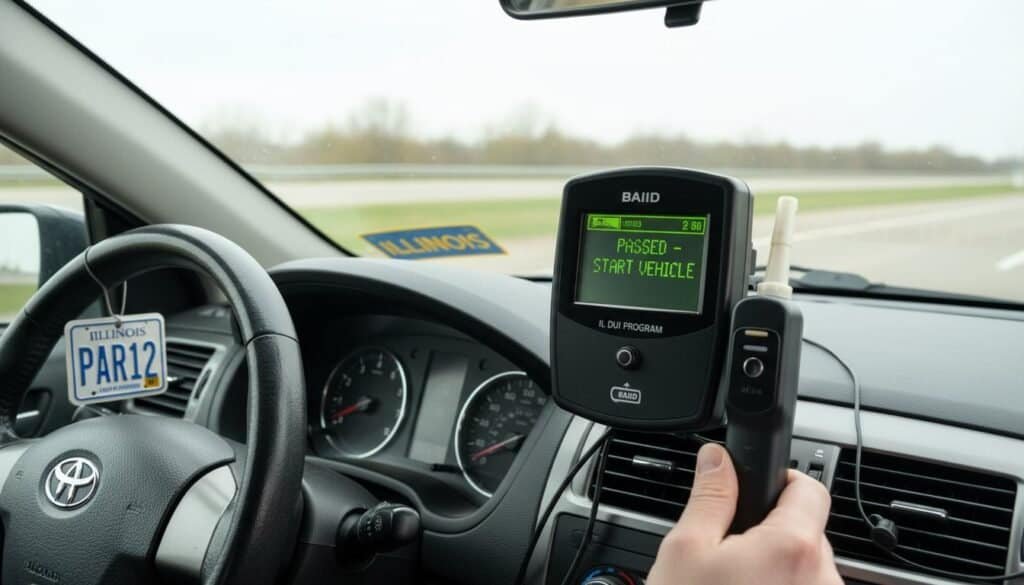
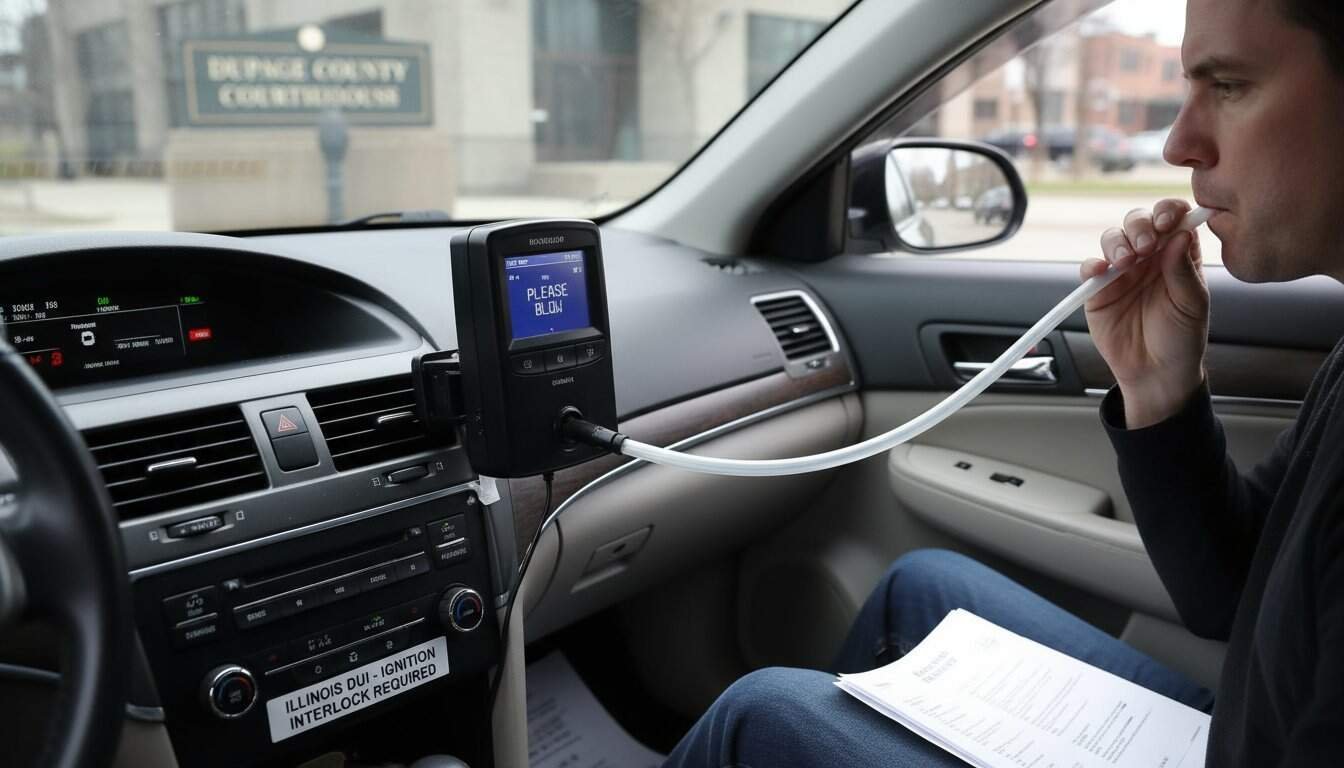
    Many first-time offenders qualify to keep driving during the suspension with a BAIID, a Breath Alcohol Ignition Interlock Device. You blow to start the car and sometimes while driving. If alcohol is detected, the car will not start, and violations are recorded.

    Ask about a Monitoring Device Driving Permit that lets you drive for work, school, and family needs with a BAIID. Timing matters, and setup takes planning.

    If BAC is .16 or higher, or you refused the test

    • A BAC of .16 or higher brings tougher consequences. Expect higher fines and at least 100 hours of community service on a first offense, and potential mandatory jail time in some cases.
    • Refusal often means a longer suspension. It can change plea options and your defense approach.

    Speak with a lawyer about which path, test failure or refusal, creates more risk in your situation.

    Under 21 and commercial drivers: special rules

    • Under 21: Illinois has zero tolerance. Any alcohol can trigger penalties, even below .08.
    • Commercial drivers: For CDL holders in a commercial vehicle, the limit is .04. A DUI can also disqualify a CDL and cause job loss.

    CDL and under-21 cases move fast, and the stakes are higher.

    Court process after a .08 DUI in Illinois: steps and outcomes

    Stay calm. The court process follows a clear track. A local DUI lawyer can guide you through each step, explain your choices, and push for the best result.

    Arraignment: your first court date

    You will hear your charge, receive paperwork, and enter a plea. Most people plead not guilty at this stage. The court sets future dates. Ask about discovery, motions, and license issues right away. This brief overview on whether your license is suspended automatically after a DUI arrest explains the split between your criminal case and the separate license suspension.

    Pre-trial: defenses, negotiations, and paths forward

    Your lawyer reviews the stop, bodycam, breath or blood testing, and reports. They may file motions to suppress or exclude evidence. Negotiations can include reduced charges, court supervision, classes, and BAIID eligibility. The goal is a result that protects your record and keeps you driving legally.

    Trial and sentencing: what the judge can order

    At trial, the state must prove you drove or were in actual physical control, and that you were impaired or at .08 or higher. If found guilty, the judge can order fines, community service, treatment, and BAIID. Supervision is often available for first-time offenders and can help you avoid a conviction if you complete all terms.

    Smart next steps: protect your license, job, and record

    Time is your friend if you act quickly. Here is a simple plan for the first days and weeks.

    Move fast: hire a DUI lawyer and track deadlines

    Request a hearing and gather helpful evidence

    • Request a license-related hearing before the deadline.
    • Collect receipts, medical records, and witness names.
    • Write down what happened while it is fresh, including times and what you ate or drank.
    • Save proof of work schedules, rides, or childcare plans if you need hardship driving relief.

    Plan for work, car insurance, and money

    • Set up rides or BAIID if allowed so you can keep working.
    • Expect higher insurance costs. Call your agent and plan for the increase.
    • Budget for court fees, classes, and device costs.
    • Do not miss court dates or classes. That can lead to warrants and more penalties.

    Common mistakes to avoid after a DUI arrest

    • Ignoring mail or deadlines
    • Posting case details on social media
    • Driving while suspended
    • Skipping court or court-ordered programs

    2025 Illinois DUI updates: what changed and why it matters

    Illinois continues to focus on safety and compliance. The trends below can affect choices after arrest.

    Refusals and high BAC cases face tougher responses

    • Refusing a chemical test brings longer suspensions, and repeat refusals can mean several years without a license.
    • Very high BAC cases often face added penalties and closer monitoring.
    • These shifts can change legal strategy. Discuss the pros and cons of a refusal versus a failed test with your lawyer early.

    For a broader rundown of what happens after an Illinois DUI arrest and how to prepare, this quick guide on post-arrest steps and rights is a helpful read.

    More focus on cannabis and other drugs

    • Police are using more tools to spot drug impairment.
    • Courts look at alcohol and drug factors together.
    • For cannabis, Illinois uses THC limits similar to alcohol rules. A blood THC level of 5 ng/ml, or 10 ng/ml in other bodily fluids within two hours of driving, can trigger a DUI charge. This matters because THC can linger after impairment fades, so testing and timing are key.

    Conclusion

    A .08 DUI in Illinois brings two fast-moving tracks, the criminal charge and the license suspension. Your best move is quick, informed action. Ask a DUI lawyer to review your stop and tests, request a hearing on the suspension, and explore BAIID so you can keep driving legally. Strong cases are built early, with clean timelines, smart paperwork, and steady follow-through. Make measured decisions today to protect your license, your job, and your future.

  • How to Find Cheap Car Insurance with Low Rates (Even After a DUI)

    How to Find Cheap Car Insurance with Low Rates (Even After a DUI)

    Finding affordable car insurance doesn’t have to feel impossible—even if you’re dealing with a DUI on your record. I’ve spent years analyzing insurance markets, comparing carrier policies, and helping drivers navigate the complicated world of auto coverage. Here’s the thing: most people overpay for car insurance because they don’t understand how rates are calculated or where to find legitimate discounts.

    The average American driver pays around $1,730 per year for full coverage car insurance, according to recent industry data. But that number jumps dramatically if you’re considered a high-risk driver. A DUI conviction can increase your premiums by 80% or more, pushing annual costs above $3,000 in many states. That’s a real financial burden—but it’s not permanent, and there are concrete steps you can take right now to lower those rates.

    Whether you’re shopping for your first policy, looking to switch carriers, or trying to rebuild your insurance profile after a DUI, this guide will walk you through everything you need to know. You’ll learn how insurers actually calculate rates, which discounts you might be missing, and how to compare quotes effectively. Let’s break down the strategies that actually work.

     Person comparing car insurance quotes on laptop with calculator and paperwork
    Shopping for cheap car insurance requires understanding how carriers calculate your rates

    Understanding How Car Insurance Rates Are Actually Calculated

    Before you can lower your car insurance costs, you need to understand what you’re working with. Insurance companies use complex algorithms to assess risk, but the factors they weigh aren’t secret. Your driving record, age, location, credit score, vehicle type, and coverage choices all play significant roles in determining your premium.

    Driving history matters most. If you’ve been in accidents or received traffic violations, insurers view you as a higher risk. A clean driving record over three to five years can qualify you for safe driver discounts ranging from 10% to 30%. Conversely, a DUI conviction signals major risk—it tells insurers you’ve engaged in behavior that dramatically increases the likelihood of future claims.

    According to the Insurance Information Institute, drivers with a DUI pay an average of $1,400 more per year for coverage compared to those with clean records. Some states see even steeper increases. In California, for example, a DUI can raise your rates by 92%, while in North Carolina, the increase averages around 340%.

    Your location impacts rates more than you’d think. Urban areas with higher traffic density, theft rates, and accident frequency typically command higher premiums. State minimum coverage requirements also vary—Michigan and Florida historically have some of the most expensive insurance markets due to no-fault laws and high fraud rates, while states like Maine and Vermont often see lower average premiums.

    Credit-based insurance scores (where legally permitted) can affect your rates by hundreds of dollars annually. Insurers have found statistical correlations between credit management and claim filing patterns. If your credit score is below 600, you might pay 70% more than someone with excellent credit, even with identical driving records.

    The type of vehicle you drive also factors in. High-performance sports cars, luxury vehicles, and models with poor safety ratings cost more to insure. Conversely, mid-size sedans with strong safety features and lower theft rates typically qualify for better rates. If you’re shopping for cheap car insurance with low rates, consider how your vehicle choice impacts your premium.

    Chart showing factors affecting car insurance rates including driving record, location, and vehicle type, book cover, bold shapes, hard edges, street art, trending on artstation, by Leesha Hannigan, Ross Tran, Thierry Doizon, Kai Carpenter, Ignacio Fernández Ríos
    The little things that affect car insurance

    Proven Strategies to Lower Your Car Insurance Premiums

    Actually, there are more ways to reduce your insurance costs than most drivers realize. Let me walk you through the strategies that consistently deliver results.

    Shop around aggressively. This is the single most effective way to save money. Rates for identical coverage can vary by $1,000 or more between carriers. You should compare quotes from at least five different companies annually. Use comparison tools, but also get quotes directly from major carriers like State Farm, GEICO, Progressive, and Allstate, as well as regional insurers that might offer competitive rates in your area.

    The National Association of Insurance Commissioners reports that comparison shopping can save drivers between 15% and 40% on annual premiums, depending on their profile and location.

    Bundle your policies. Multi-policy discounts are among the easiest savings to capture. If you combine your auto insurance with homeowners or renters coverage through the same carrier, you’ll typically save 15% to 25% on both policies. That adds up to hundreds of dollars per year for most households.

    Increase your deductible strategically. Moving from a $500 deductible to $1,000 can lower your premium by 15% to 30%. Just make sure you have enough saved to cover the higher out-of-pocket cost if you need to file a claim. This strategy works best if you’re a safe driver unlikely to need coverage frequently.

    Ask about lesser-known discounts. Insurance companies offer dozens of discount programs, but they won’t always advertise them proactively:

    • Defensive driving courses: Completing an approved course can save 5% to 10%
    • Low mileage discounts: Driving under 7,500 miles annually often qualifies you for savings
    • Paperless billing: Some insurers discount 3% to 5% for digital communications
    • Pay-in-full discounts: Paying your annual premium upfront instead of monthly can save 5% to 10%
    • Professional affiliations: Members of certain organizations, unions, or employers may qualify for group rates
    • Good student discounts: If you’re under 25 and maintain a B average or higher, you might save 10% to 20%
    • Anti-theft devices: Factory-installed or aftermarket security systems can reduce premiums
    • Automatic payments: Setting up autopay might qualify you for a small discount

    Consider usage-based insurance programs. Telematics programs like Progressive’s Snapshot, State Farm’s Drive Safe & Save, or Allstate’s Drivewise monitor your actual driving behavior through a mobile app or plug-in device. If you demonstrate safe driving habits—avoiding hard braking, limiting late-night driving, and maintaining steady speeds—you can save up to 30% on your premium.

    According to research from the Casualty Actuarial Society, usage-based insurance programs have shown promising results in rewarding genuinely safe drivers with meaningful discounts.

    Review your coverage annually. As your vehicle ages and depreciates, you might no longer need comprehensive and collision coverage. Once your car is worth less than 10 times your annual premium, it’s often more cost-effective to drop these coverages and self-insure for physical damage. Just maintain liability coverage to protect yourself financially if you’re at fault in an accident.

    Woman reviewing car insurance policy documents with highlighted sections, digital painting, artstation, concept art, donato giancola, Joseph Christian Leyendecker, WLOP, Boris Vallejo, Breathtaking, 8k resolution, extremely detailed, beautiful, establishing shot, artistic, hyperrealistic, beautiful face, octane render, cinematic lighting, dramatic lighting, masterpiece
    The Stress of raising insurance premiums, causing her to melt way.

    Time is your ally. As your DUI ages, its impact on your rates gradually decreases. You’ll see your first meaningful rate drop around the three-year mark in most states. By the five-year point, some insurers will treat you similarly to standard-risk drivers, especially if you’ve maintained a spotless record since the incident.

    Consider state-assigned risk pools as a last resort. If you absolutely cannot find coverage in the private market, every state operates an assigned risk plan that guarantees basic coverage to any licensed driver. These policies are expensive—often 2 to 3 times standard rates—but they keep you legal while you work on rebuilding your insurance profile.

    The Insurance Research Council has published extensive research on high-risk driver markets and state-assigned risk programs, offering valuable insights into how these systems function.

    Continue Reading – Best Cheap Car Insurance Companies for Low Rates in 2025